

Radiesse is often chosen by people who want more than a quick smoothing effect. In Fort Lauderdale, where sun exposure, travel, and seasonal schedules can all influence skin goals, many patients are looking for a refined option that may support structure while encouraging the skin’s own collagen response over time.
In simple terms, Radiesse is a calcium hydroxylapatite, or CaHA, dermal filler. It can provide immediate-looking support from the gel carrier, while the CaHA microspheres act as a scaffold that may help stimulate collagen production as the product gradually integrates. Results vary from person to person, so a dermatologist-led consultation is the best way to understand whether it fits your anatomy, timing, and goals.
Quick answer
- Radiesse is a CaHA dermal filler used for selected facial wrinkles, folds, contour support, and certain approved volume concerns.
- It may help encourage new collagen formation around the CaHA particles as part of the skin’s natural response.
- The visible effect can feel more structural than some softer fillers, depending on placement and dilution technique.
- Many people choose Radiesse when they want gradual support that may last beyond a typical short-term filler plan, though timelines vary.
- A qualified clinician should evaluate whether Radiesse is appropriate for your skin, facial anatomy, medical history, and aesthetic goals.
What Radiesse is
Radiesse is an injectable dermal filler made with calcium hydroxylapatite microspheres suspended in a gel carrier. Calcium hydroxylapatite is a mineral-like material, and in aesthetic medicine it is used in a carefully formulated injectable product. Depending on the area treated and the technique used, Radiesse may be placed to improve the look of deeper folds, support facial contours, or address selected volume concerns.
Unlike fillers that work mainly by attracting water or adding soft volume, Radiesse is often described as biostimulatory because it may encourage collagen development around the microspheres. That collagen-supportive process is one reason patients may ask about Radiesse when they want a refreshed look that develops with subtlety rather than a dramatic change.
How collagen stimulation works
Collagen is one of the proteins that helps skin look firm, smooth, and resilient. As collagen naturally declines with age and environmental exposure, the face may show deeper folds, softening around the jawline, or a less defined contour. Radiesse does not simply replace collagen. Instead, the CaHA particles may create a supportive framework that encourages the surrounding tissue to build collagen over time.
The first visible change after treatment can come from the product’s gel carrier and the way the filler is placed. Over time, as the gel carrier gradually changes, the CaHA microspheres remain temporarily and may support new collagen formation. This is why Radiesse is often discussed as a filler with both immediate structural support and longer-term collagen-related benefits.
Why results may last over a year
The title promise matters: Radiesse may support collagen stimulation for over a year in some patients, but it should never be framed as the same experience for everyone. Longevity depends on the treatment area, amount used, injection technique, metabolism, skin quality, sun exposure, lifestyle factors, and the plan your clinician recommends.
Some people notice that Radiesse feels like it has a firmer, more lifting quality compared with softer fillers. Others may prefer it in a diluted or hyperdiluted approach for collagen-supportive skin quality improvement rather than traditional volume replacement. The right strategy depends on whether the goal is contour, fold support, skin texture refinement, or a blend of these concerns.
Who may be a good candidate
Radiesse may be considered for adults who want to address selected age-related volume changes, deeper folds, or contour concerns and who prefer a collagen-supportive approach. It may be especially appealing for patients who want a treatment plan that looks polished and gradual rather than obvious.
It is not the right choice for every area or every patient. A dermatologist can evaluate facial movement, skin thickness, prior filler history, medical conditions, medications, and whether another injectable or device-based treatment may be a better match.
What to expect at a consultation
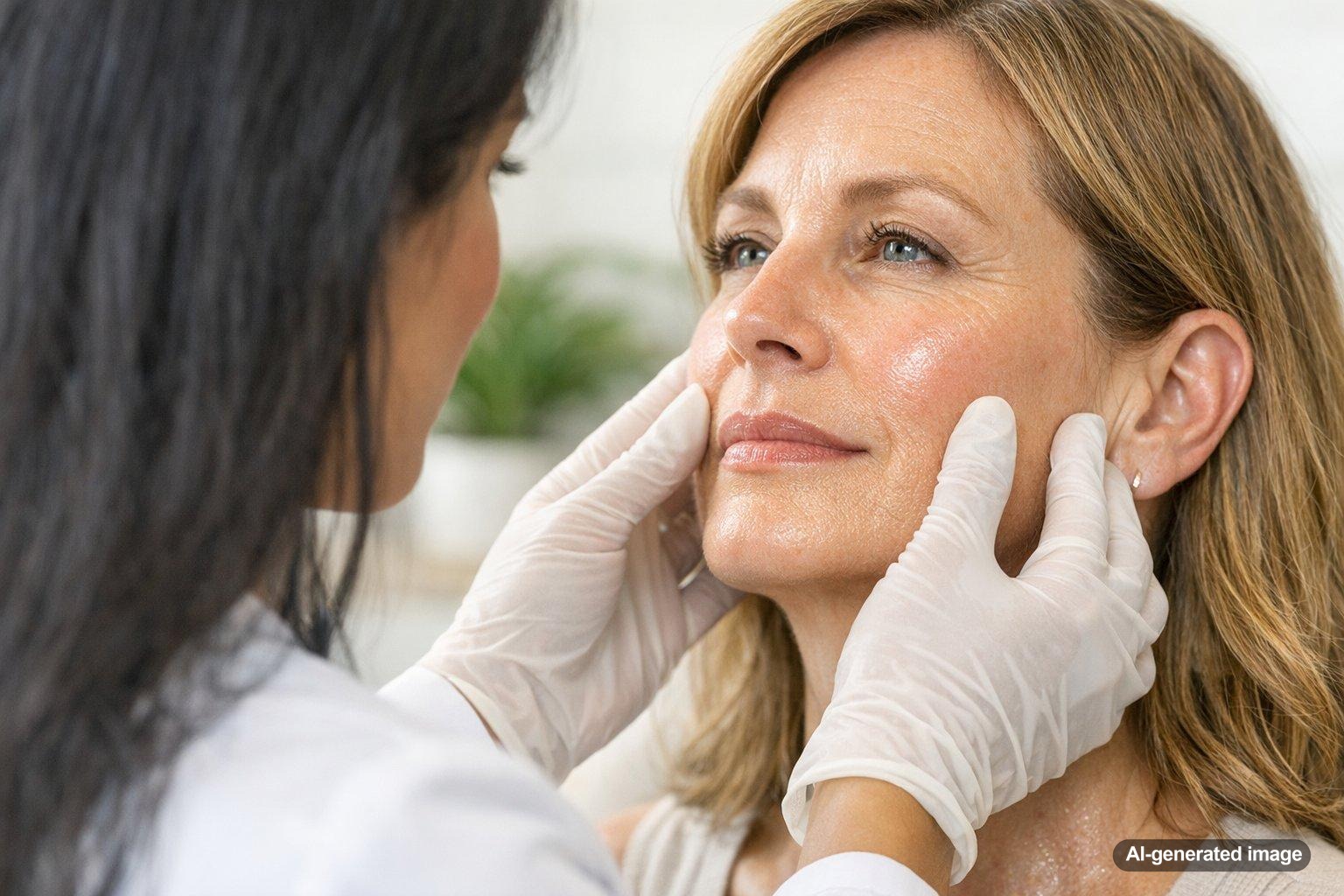
A thoughtful Radiesse visit should begin with anatomy, not trends. Your clinician may assess facial structure, expression, asymmetry, skin quality, and the areas where collagen support could be useful. You can also expect a discussion of goals, downtime, possible side effects, alternatives, and what a conservative plan might look like.
For snowbirds and international visitors in Fort Lauderdale, timing can be important. If you are planning travel, events, or a seasonal visit, mention those dates during your appointment so your clinician can help you plan around potential swelling, bruising, follow-up needs, and realistic expectations.
Possible side effects and safety considerations
Dermal fillers can be associated with temporary swelling, bruising, tenderness, redness, firmness, or unevenness. Less common but more serious risks can occur, including infection, nodules, allergic-type reactions, or vascular complications. These risks are one reason filler treatments should be performed by an experienced medical professional who understands facial anatomy and complication management.
Radiesse is generally not used in the lips or very superficial fine lines because product choice and placement depth matter. Your clinician can explain where it may be appropriate and where a different approach may be safer or more natural-looking.
Professional options
For collagen-supportive rejuvenation, common professional options may include biostimulatory fillers, hyaluronic acid fillers, neuromodulators, microneedling, radiofrequency treatments, laser resurfacing, and medical-grade skincare guidance. These options are not interchangeable. Each works differently, and the best plan may involve one treatment or a staged combination.
At Waverly DermSpa, we offer Radiesse and can help you understand whether it may be appropriate.
When to see a dermatologist
Consider a dermatologist-led evaluation if you are unsure which filler you have had in the past, have a history of nodules or filler complications, take blood-thinning medications, have autoimmune or inflammatory conditions, are pregnant or nursing, or have an upcoming procedure or travel schedule. You should also contact a medical professional promptly after filler if you experience severe pain, skin color changes, worsening swelling, fever, vision symptoms, or symptoms that feel unusual for you.
FAQ
Does Radiesse build collagen right away?
The visible effect may appear early because Radiesse adds structural support at the time of injection. Collagen-related changes are more gradual and vary from person to person.
Is Radiesse the same as hyaluronic acid filler?
No. Hyaluronic acid fillers and CaHA fillers have different materials, textures, uses, and reversal considerations. Your clinician can explain which option best fits your treatment area and goals.
Can Radiesse look natural?
It can look natural when the patient is well selected and the treatment is planned conservatively. Natural-looking results depend heavily on anatomy, product placement, and injector experience.
How long does Radiesse last?
Duration varies. Some patients may notice improvement for over a year, while others may have a shorter or longer experience depending on area treated, dose, metabolism, and treatment plan.
Can I combine Radiesse with other treatments?
Often, yes, but sequencing matters. A dermatologist can help decide whether Radiesse, another filler, neuromodulator, laser, microneedling, or skincare should come first.
Ready to get help?
Schedule an appointment or send a message and our team will get back to you.
Prefer to call? 954-666-3736
This article is for educational purposes and is not medical advice. For diagnosis and personalized treatment, please book an appointment with a board-certified dermatologist.
Sources & further reading
- U.S. Food and Drug Administration (FDA) – Dermal Fillers (Soft Tissue Fillers)
- U.S. Food and Drug Administration (FDA) – FDA-Approved Dermal Fillers
- Cleveland Clinic – Dermal Fillers: What They Are, Types, Benefits & Side Effects
