

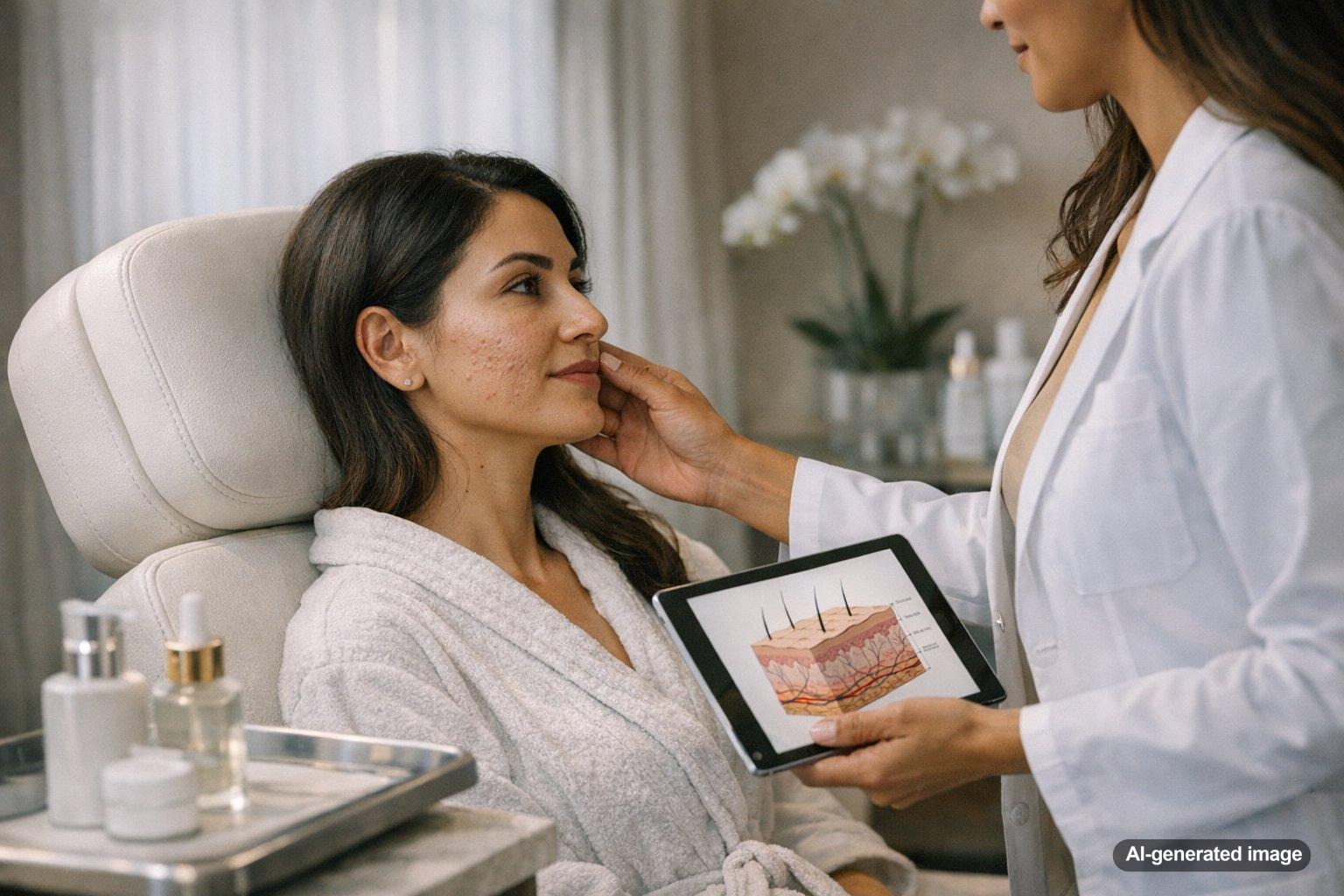
Acne scars can feel frustrating long after active breakouts have calmed. Some marks fade gradually, while true textural scars may need a more personalized plan. The first step is understanding what kind of change you are seeing: color, texture, indentation, or raised tissue.
At Waverly DermSpa in Fort Lauderdale, acne scar conversations are approached with calm, science-forward guidance. A dermatologist can evaluate your skin type, scar pattern, acne activity, and goals before discussing options that may be appropriate for you.
Quick answer
- Acne scars are not all the same; they may look like shallow depressions, narrow pits, rolling texture, raised areas, or lingering discoloration.
- Preventing new breakouts and avoiding picking can help reduce the chance of future scarring.
- At-home skincare may support skin health, but it usually cannot remodel established textural scars on its own.
- Professional options may include microneedling, laser treatments, chemical peels, resurfacing procedures, or combination plans after evaluation.
- A dermatologist can help distinguish acne scars from active acne, pigmentation, or another skin concern.
What acne scars are
Acne scars are changes in the skin that can remain after inflammation from acne. When a breakout is deeper or more inflamed, the skin’s repair process may create too little collagen, too much collagen, or uneven collagen. This can leave texture changes that are different from temporary red, pink, purple, or brown marks.
Post-acne discoloration is often described as a mark rather than a scar. These marks can be noticeable, especially in bright light or after sun exposure, but they are not always the same as an indentation or raised scar. A dermatologist can help clarify what you are seeing and what kind of approach may make sense.
Common types of acne scars
- Ice pick scars: Narrow, deeper-looking indentations that may look like small pinpoints in the skin.
- Boxcar scars: Depressed areas with more defined edges, often round or oval in shape.
- Rolling scars: Wider, softer depressions that can create an uneven or wavelike texture.
- Hypertrophic scars: Raised scars that form when the skin creates excess collagen during healing.
- Post-inflammatory discoloration: Red, pink, purple, tan, or brown marks that can follow breakouts, especially if the skin was inflamed or picked.
Common causes or triggers
Acne scarring is often linked to the intensity of inflammation and how the skin heals. Not every breakout leaves a scar, and not every person scars in the same way.
- Deep, tender, or cyst-like acne lesions
- Repeated inflammation in the same area
- Picking, squeezing, or aggressive extractions
- Delayed acne management when breakouts are persistent
- Individual healing tendencies and collagen response
- Sun exposure that can make discoloration look more noticeable
What you can do at home
At-home care is most helpful for supporting the skin barrier, reducing irritation, and helping prevent new breakouts that may lead to future marks. Keep the routine steady and gentle rather than harsh or overly complicated.
- Use a gentle cleanser that does not leave the skin feeling tight or stripped.
- Wear broad-spectrum sunscreen daily, especially in Fort Lauderdale’s high-sun environment.
- Avoid picking or squeezing blemishes, even when they feel close to the surface.
- Use acne products consistently, but avoid stacking too many exfoliating or drying products at once.
- Moisturize to support the skin barrier, particularly if using retinoids, acids, or acne-focused products.
- Book a dermatology visit if breakouts are deep, painful, spreading, or leaving new marks.
Professional options
Professional acne scar care is usually customized because different scars respond differently. A dermatologist may recommend treating active acne first, then building a plan for texture, discoloration, or both. Common professional categories include:
- Microneedling: A controlled treatment that may support collagen remodeling in appropriate candidates.
- Laser resurfacing or laser-based treatments: Options that may help address texture, tone, or both depending on the device, settings, and skin type.
- Chemical peels: Selected peel types may help with tone, clogged pores, and surface-level texture concerns.
- Resurfacing procedures: Certain procedures may be considered for more visible texture, depending on scar type and downtime tolerance.
- Combination plans: Many scar patterns involve more than one type of change, so a staged approach may be discussed.
At Waverly DermSpa, we offer SkinPen and can help you understand whether it may be appropriate.
When to see a dermatologist
Consider scheduling a dermatology visit if acne is painful, recurring, leaving marks, or affecting your confidence. It is also worth getting checked if you are unsure whether a spot is acne, a scar, pigmentation, or another skin concern.
- Breakouts are deep, tender, or cyst-like.
- New scars or dark marks are forming after acne.
- Over-the-counter products are irritating your skin or not helping enough.
- You have a history of raised or thick scars.
- You are interested in procedures and want guidance based on your skin type and scar pattern.
FAQ
Can acne scars fade on their own?
Some discoloration after acne can soften with time, especially with sun protection and a consistent routine. Textural scars, such as indentations or raised scars, may be more persistent and often benefit from professional evaluation.
Are acne marks the same as acne scars?
Not always. Marks usually refer to color changes left behind after inflammation. Scars usually refer to texture changes, such as pits, depressions, or raised tissue.
Is microneedling an option for acne scars?
Microneedling may be discussed for certain acne scar patterns, but it is not the right choice for everyone. A clinician can evaluate your skin, acne activity, scar type, and risk factors before recommending an option.
Should acne be treated before scar treatments?
Often, yes. If breakouts are still active, your dermatologist may focus first on calming acne to help reduce the chance of new marks or scars forming.
Can darker skin tones treat acne scars safely?
Many people with deeper skin tones can explore professional options, but treatment selection and settings matter. A dermatologist can help choose approaches that consider pigmentation risk and skin sensitivity.
Ready to get help?
Schedule an appointment or send a message and our team will get back to you.
Prefer to call? 954-666-3736
Disclaimer
This article is for educational purposes and is not medical advice. For diagnosis and personalized treatment, please book an appointment with a board-certified dermatologist.
