

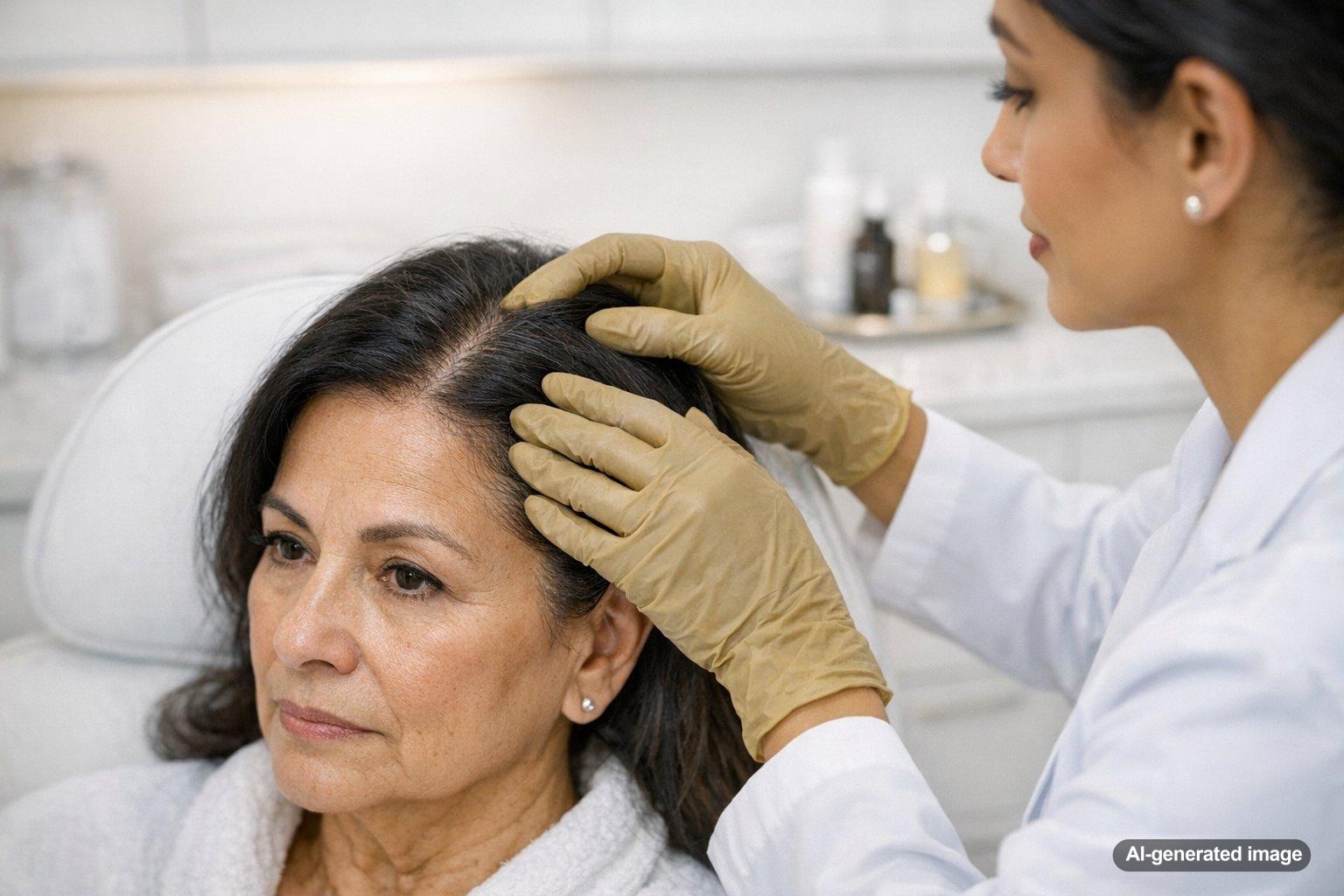
It is often dandruff, but not always. Flaking on the scalp can come from simple dryness, product buildup, seborrheic dermatitis, psoriasis, eczema, contact irritation, or sometimes an infection. The difference is not always obvious at home, especially when itching, redness, crusting, soreness, or hair shedding enters the picture.
If flakes are mild, occasional, and improve with gentle shampooing or an over-the-counter dandruff shampoo, it may be reasonable to start conservatively. If the scalp is painful, inflamed, spreading, bleeding, oozing, causing patchy hair loss, or not improving, a dermatologist can evaluate what is really going on and help guide the next step.
Quick answer
- Simple dandruff often causes loose white flakes and mild itching without major redness or soreness.
- Seborrheic dermatitis can look like stubborn dandruff with greasy scale, redness, and irritation, often around the scalp, eyebrows, ears, or face.
- Psoriasis may cause thicker plaques, more noticeable inflammation, silvery scale, and sometimes temporary shedding from scratching or inflammation.
- Infection or another scalp condition may be more likely if there is pain, pus, crusting, swollen bumps, broken hairs, spreading patches, or sudden patchy hair loss.
- When in doubt, get checked. A board-certified dermatologist can examine the scalp and help distinguish look-alike conditions.
| Clue | More consistent with dandruff | Worth a dermatology visit |
|---|---|---|
| Flakes | Loose, fine, white flakes | Thick scale, crust, or tightly stuck flakes |
| Skin color or irritation | Little to no visible inflammation | Redness, tenderness, burning, oozing, or bleeding |
| Itch | Mild and occasional | Severe, persistent, or disrupting sleep |
| Hair changes | No clear patches of loss | Patchy shedding, broken hairs, or tender bumps |
What dandruff usually looks like
Dandruff is commonly used to describe flaking of the scalp. It can be mild, off and on, and more noticeable on dark clothing or after brushing the hair. Some people notice itching, but the scalp may otherwise feel normal.
Dandruff can overlap with a condition called seborrheic dermatitis, which tends to be more persistent and inflamed. In seborrheic dermatitis, flakes may look greasy or yellowish, and irritation can also appear around the eyebrows, sides of the nose, ears, eyelids, or chest.
When flakes may be something more than dandruff
Several scalp conditions can mimic dandruff. Scalp psoriasis may create thicker areas of scale and inflammation. Eczema or contact dermatitis may follow irritation from hair dye, fragrance, styling products, or frequent washing. Fungal infection, folliculitis, or other inflammatory scalp conditions can also cause scaling, bumps, soreness, or hair changes.
Because these conditions can look similar, it is best not to rely on appearance alone. A dermatologist can examine the pattern, review your symptoms, and decide whether additional testing or prescription treatment may be appropriate.
Common causes or triggers
- Stress, weather changes, or a scalp routine that has recently changed
- Oily scalp areas and yeast-related inflammation associated with seborrheic dermatitis
- Hair products that irritate the skin, including fragrance, dyes, gels, sprays, or heavy oils
- Overwashing, underwashing, or using harsh shampoos that disrupt the scalp barrier
- Inflammatory skin conditions such as psoriasis or eczema
- Possible infection, especially when there is pain, swelling, crusting, pus, or patchy hair loss
What you can do at home
For mild flaking without major redness, pain, or hair loss, start with a gentle approach. Wash the scalp regularly enough to remove oil and buildup, but avoid aggressive scrubbing. Consider rotating in an over-the-counter dandruff shampoo and give it enough contact time on the scalp before rinsing, following the product label.
Try to simplify your routine for a few weeks. Pause fragranced scalp products, heavy oils, and harsh exfoliating scrubs if they seem to sting or worsen itching. Avoid picking at scale, since scratching can irritate the scalp and may make shedding or crusting more noticeable.
Professional options
In the office, a dermatologist may look closely at the scalp, review your history, and determine whether the pattern fits dandruff, seborrheic dermatitis, psoriasis, eczema, contact dermatitis, infection, or another condition. Common options may include prescription-strength shampoos, anti-inflammatory scalp solutions, antifungal treatments, or other targeted therapies depending on the evaluation.
If hair shedding is part of the concern, your clinician may also ask about timing, stressors, medications, nutrition, styling practices, and whether the loss is diffuse or patchy. The right plan depends on the cause, so a focused exam matters.
When to see a dermatologist
- Your flakes do not improve after a reasonable trial of conservative scalp care.
- The scalp is painful, swollen, bleeding, oozing, or crusted.
- You notice patchy hair loss, broken hairs, or tender bumps.
- The rash spreads beyond the scalp or appears on the face, ears, neck, elbows, or other areas.
- You have a history of psoriasis, eczema, immune suppression, or recurrent infections.
- You are unsure what is happening and want a clear diagnosis before trying stronger treatments.
FAQ
Can dandruff cause hair loss?
Simple dandruff usually does not cause permanent hair loss. However, significant inflammation, scratching, infection, or an underlying scalp condition can be associated with shedding, so new or patchy hair loss should be evaluated.
Is an itchy, flaky scalp contagious?
Most dandruff-like conditions are not contagious, but certain infections can spread. If there is pus, pain, crusting, broken hairs, or rapidly spreading patches, it is worth getting checked.
How do I know if it is psoriasis?
Scalp psoriasis can cause thicker, more defined patches with scaling and inflammation, but it can resemble seborrheic dermatitis. A dermatologist can often tell by examining the scalp, skin, and nails.
Should I stop using oils on my scalp?
If oils seem to worsen itching, greasiness, buildup, or irritation, pausing them may help you see whether they are contributing. Some scalps tolerate oils poorly, especially when inflammation is already present.
Can I treat this with dandruff shampoo forever?
Some people use medicated shampoos intermittently for maintenance, but persistent symptoms deserve a diagnosis. Your clinician can help decide whether ongoing shampoo use, a prescription option, or a different approach makes sense.
Ready to get help?
Schedule an appointment or send a message and our team will get back to you.
Prefer to call? 954-666-3736
Disclaimer: This article is for educational purposes and is not medical advice. For diagnosis and personalized treatment, please book an appointment with a board-certified dermatologist.
Sources & further reading
- American Academy of Dermatology (AAD) – How to treat dandruff
- American Academy of Dermatology (AAD) – Seborrheic dermatitis overview
- Mayo Clinic – Scalp psoriasis vs. seborrheic dermatitis
- DermNet – Diagnosis of scalp rashes
