

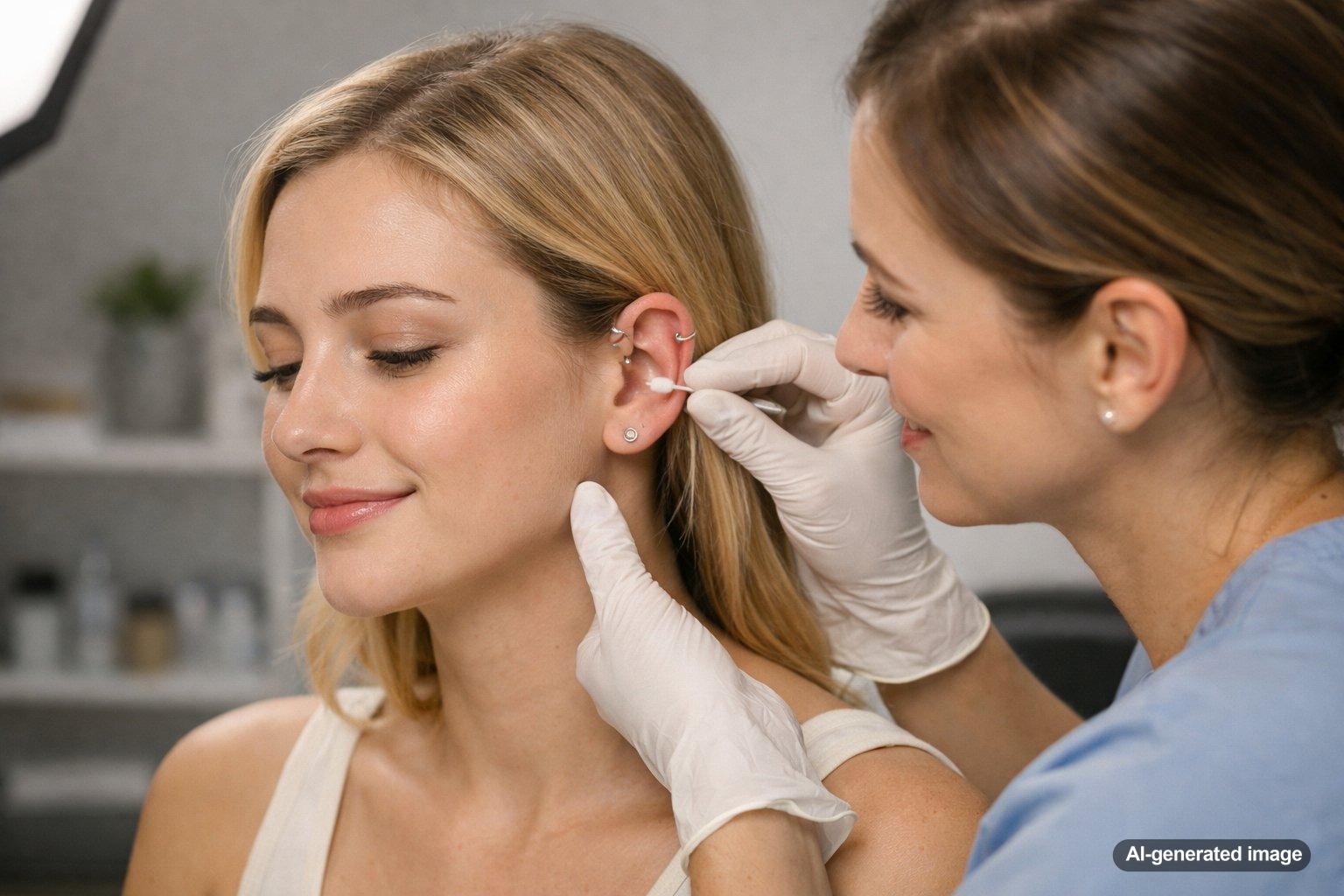
It’s common to notice some crusty buildup around piercings as they heal. This can be a sign of your body adjusting to the new jewelry. However, it’s important to understand whether it’s part of the natural healing process or if there’s an underlying issue.
Quick Answer
- Crusty build-up is often normal during the healing process.
- It can be caused by dried lymph fluid or body oils.
- Excessive buildup or changes in color may indicate infection.
- Keep the area clean but avoid over-cleaning or using harsh chemicals.
- If in doubt, seek professional evaluation.
What it is
Crusty build-up around a piercing typically consists of dried lymph fluid, which is a natural part of the body s healing process. It forms as your body works to repair the skin around the new jewelry.
Common causes/triggers
- Body s natural healing response
- Excessive touching or irritation
- Jewelry that s too tight or poorly fitted
- Use of harsh cleaning products or chemicals
What you can do at home
To care for your piercing and reduce crusty build-up, gently clean it with saline solution and avoid using alcohol or hydrogen peroxide. Don t twist or move the jewelry unnecessarily. If you feel discomfort, try to limit contact with the area and let it heal naturally.
Professional options
If the crusty build-up continues or worsens, a dermatologist or professional piercer can help assess the situation. They may recommend a more tailored cleaning routine or advise on jewelry adjustments.
When to see a dermatologist
- If the crusty build-up becomes excessive or changes color (yellow or green could signal infection).
- If the area becomes increasingly painful, swollen, or hot to the touch.
- If you experience unusual discharge, or if the piercing site becomes red and irritated.
FAQ
1. Is crusty build-up always a sign of infection?
No, a small amount of crusting is normal as the body heals. However, if the buildup persists and is accompanied by pain, redness, or unusual discharge, it may be a sign of infection.
2. How can I clean my piercing without irritating it?
Use a saline solution for gentle cleaning. Avoid harsh chemicals like alcohol, which can dry out the skin and irritate the piercing.
3. How long does it take for a piercing to heal completely?
The healing time for piercings varies depending on the location and type of jewelry, but it can take anywhere from 6 weeks to 6 months. During this time, some crusting is normal.
Ready to get help?
Schedule an appointment or send a message and our team will get back to you.
Prefer to call? 954-666-3736
Disclaimer
This article is for educational purposes and is not medical advice. For diagnosis and personalized treatment, please book an appointment with a board-certified dermatologist.
