

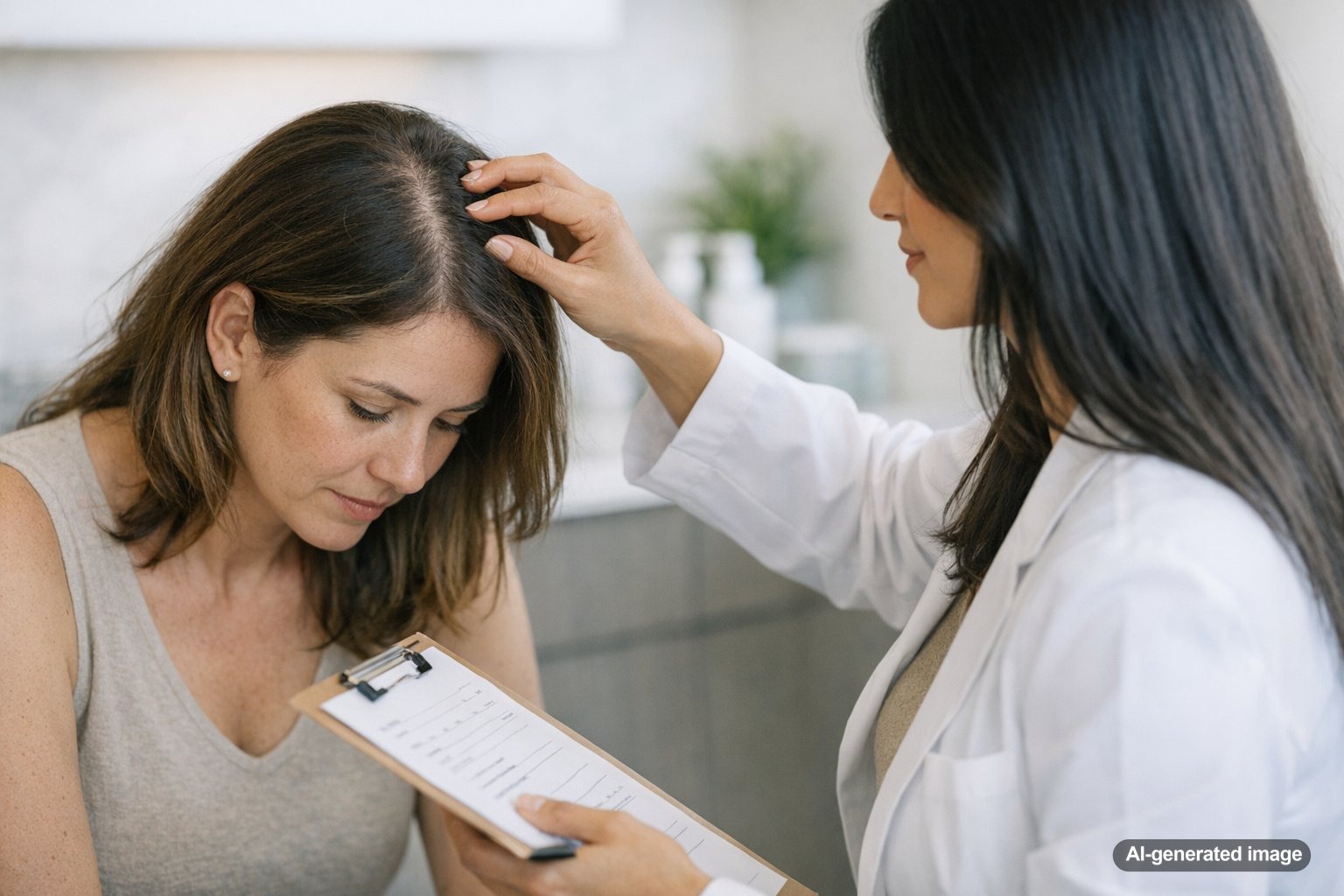
Sudden hair thinning can feel unsettling, especially when your hair seemed normal just a few weeks ago. In many cases, the change is related to a trigger such as stress, illness, hormones, nutrition, medications, or scalp inflammation rather than one single cause.
The good news is that a pattern of sudden shedding does not automatically mean permanent hair loss. A careful evaluation can help sort out what may be contributing, what is temporary, and what deserves closer attention.
Quick answer
- Sudden hair thinning is often linked to a recent internal or external trigger.
- Common possibilities include stress, illness, hormonal shifts, low iron or poor nutrition, medications, and scalp conditions.
- How the thinning looks matters. Diffuse shedding is different from patchy hair loss or a widening part.
- Gentle hair care may help reduce additional stress on the hair while you monitor changes.
- If shedding is persistent, rapid, patchy, or associated with scalp symptoms, a dermatologist can evaluate it.
What sudden hair thinning can mean
Hair does not grow in a perfectly steady line. Each strand cycles through phases of growth, rest, and shedding. When that cycle gets disrupted, many people notice more hair in the shower, on the brush, or around the house. Others first notice a thinner ponytail, a wider part, or less fullness at the temples or crown.
Sometimes the trigger happened weeks or even months before the shedding becomes obvious, which is one reason the change can seem sudden even when the process has been building quietly in the background.
Common causes and triggers
- Stress or a recent illness: Physical or emotional stress can be associated with increased shedding.
- Hormonal changes: Postpartum changes, perimenopause, menopause, thyroid issues, or shifts related to birth control can affect hair density.
- Nutritional factors: Low iron, low protein intake, restrictive dieting, or other nutrient gaps may play a role.
- Medication changes: Some medications may be associated with increased shedding in certain people.
- Scalp inflammation: Redness, itching, flaking, or tenderness can point to a scalp issue that deserves attention.
- Tight styling or heat damage: Repeated tension from ponytails, extensions, braids, or frequent hot tools can add stress to the hair.
- Pattern hair loss: A gradually widening part or thinning at the crown can become more noticeable during times of stress or hormonal change.
- Patchy loss: Smooth round patches or sudden focal thinning are worth getting checked rather than guessing.
What you can do at home
Keep your routine simple and gentle while you pay attention to the pattern. Avoid very tight hairstyles, limit unnecessary heat, and be cautious with harsh chemical processing if your hair already feels fragile.
A balanced diet with adequate protein matters, and it can help to think back on recent changes such as dieting, travel, illness, major stress, new medications, or hormonal shifts. It may also be useful to take a few photos in consistent lighting every couple of weeks so you can track whether the thinning is stable, improving, or progressing.
Try not to start multiple products at once. When too many changes happen together, it becomes harder to tell what is helping and what may be irritating your scalp.
Professional options
A dermatologist can look at the pattern of thinning, examine the scalp, review your timeline, and decide whether testing or treatment makes sense. Common options include evaluating for shedding triggers, scalp inflammation, or pattern hair loss and then discussing a plan based on your history and goals.
For some patients, office-based treatments or procedural support may be part of the conversation, but the right approach depends on the cause of the thinning rather than the symptom alone. At Waverly DermSpa, we offer PRFM for Hair Loss and can help you understand whether it may be appropriate.
When to see a dermatologist
- Your hair is thinning quickly or shedding feels dramatic.
- You notice round patches, bald spots, or thinning focused in one area.
- Your scalp is itchy, painful, flaky, burning, or visibly inflamed.
- You have thinning along with fatigue, menstrual changes, recent illness, or major hormonal changes.
- The problem has lasted more than a few months or keeps getting worse.
- You’re unsure what is causing it and do not want to waste time on guesswork.
FAQ
Can stress really make hair thin?
Yes, many people notice increased shedding after a stressful event or illness. The timing can be delayed, which is why the thinning may seem to appear out of nowhere.
Is sudden hair thinning always permanent?
No. Some forms of shedding are temporary, while others need treatment or longer-term management. The pattern and cause matter.
Should I start supplements right away?
Not always. Hair thinning can have different causes, so it is better to avoid assuming that one vitamin or supplement is the answer. A clinician can help you decide what makes sense for your situation.
Can washing my hair too often cause thinning?
Frequent washing usually does not cause true hair loss, but it may make normal shedding more noticeable. Rough handling, excessive heat, or harsh products can add stress to fragile hair.
When is hair thinning a red flag?
Patchy loss, rapid progression, scalp symptoms, or visible changes that keep worsening are good reasons to schedule an evaluation.
Ready to get help?
Schedule an appointment or send a message and our team will get back to you.
Prefer to call? 954-666-3736
This article is for educational purposes and is not medical advice. For diagnosis and personalized treatment, please book an appointment with a board-certified dermatologist.
