

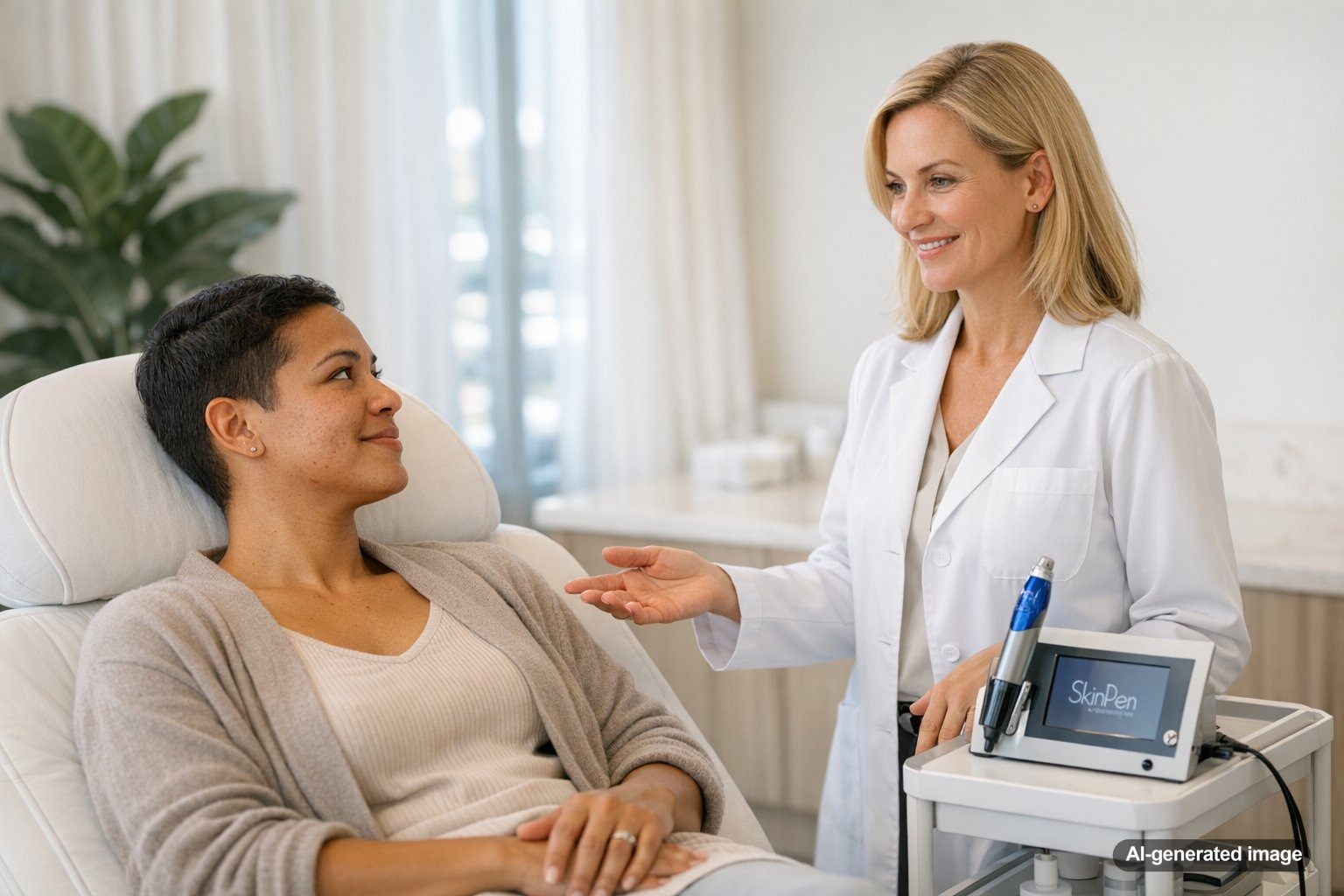
Acne can leave behind reminders long after breakouts calm down. If youre noticing uneven texture or lingering marks, microneedling is one option that may help support smoother-looking skin over time, with a plan tailored to your skin and goals.
Quick answer
- SkinPen microneedling uses tiny, controlled micro-injuries to encourage your skins natural repair process.
- It may help improve the look of acne scars, enlarged pores, and uneven texture, with results that vary.
- Downtime is usually modest, but aftercare matters to reduce irritation and protect your skin barrier.
- Not everyone is a candidate, especially with active acne, certain skin conditions, or a history of problematic scarring.
What it is (plain English)
Microneedling is a procedure that creates very small, controlled channels in the skin using fine needles. Those micro-channels can signal the skin to repair itself by building new collagen and elastin. SkinPen is a microneedling device commonly used in medical aesthetics, and it is typically performed in a clean, controlled clinical setting with careful attention to depth, technique, and aftercare.
For acne scars and texture, the goal isnt to sand the skin down. Instead, the goal is to support healthier structure beneath the surface so the skin can look smoother and more even as it remodels.
Common causes/triggers
- Inflammatory acne that affected deeper layers of skin
- Picking or squeezing blemishes, which can worsen inflammation and scarring risk
- Delayed or inconsistent acne control, allowing repeated inflammation in the same area
- Genetics and how your body builds and breaks down collagen
- Sun exposure that can make discoloration more noticeable and slow the look of recovery
- Skin tone and sensitivity, which can affect post-acne discoloration and irritation patterns
What you can do at home
At-home care wont erase true scars, but it can improve how skin looks and behaves, and it can support professional treatment outcomes. Focus on calm, consistent habits rather than aggressive exfoliation.
- Protect your skin daily. A broad-spectrum sunscreen can help reduce the look of post-acne discoloration and protect collagen support.
- Keep your routine simple. A gentle cleanser, fragrance-light moisturizer, and sunscreen are a strong baseline for most people.
- Support the skin barrier. If your skin feels tight, stings, or flakes, prioritize hydration and barrier-supporting moisturizers instead of adding more actives.
- Avoid picking. Even occasional picking can increase the chance of discoloration and texture changes.
- Be cautious with strong actives. If you use retinoids or exfoliating acids, your clinician can help you time them appropriately around in-office treatments to reduce irritation.
Professional options
Acne scars and texture arent one-size-fits-all, so treatment is often about matching the right tools to the scar pattern, skin tone, and how reactive your skin is.
- Microneedling. Often used to address texture and certain acne scar patterns by encouraging collagen remodeling.
- Chemical peels. Can help with surface texture and discoloration, with depth and ingredient selection based on skin needs.
- Laser and energy-based treatments. Some options target texture, pores, redness, or pigmentation; selection depends on skin type and downtime preferences.
- Scar-specific techniques. Certain scar types may respond better to targeted approaches that a dermatologist can assess in person.
- Acne control plans. If acne is still active, controlling new inflammation is often step one before focusing on scar refinement.
At Waverly DermSpa, we offer SkinPen microneedling and can help you understand whether it may be appropriate.
When to see a dermatologist
If youre unsure what youre seeing, or if your skin is changing in a way that concerns you, its worth getting checked. A dermatologist can evaluate scar type, active acne, and any underlying factors that could affect results or safety.
- Active, painful acne that is leaving new marks or bumps
- New or worsening dark spots after breakouts, especially if you have sensitive or easily reactive skin
- A history of keloids or raised scars
- Frequent irritation, eczema-like flares, or rosacea symptoms
- Any open sores, spreading rash, or signs of infection
- If youre pregnant, nursing, or on prescription medications and want guidance on what treatments are reasonable to consider
FAQ
Does microneedling help all acne scars?
It may help some patterns more than others. Rolling or shallow boxcar scars often respond differently than deeper icepick scars. An in-person assessment helps set realistic expectations and choose the most appropriate plan.
Is it the same as an at-home roller?
No. Professional microneedling uses sterile, medical-grade equipment and controlled settings for depth and technique. At-home devices can increase irritation and infection risk if not used carefully.
How many sessions do people usually need?
It varies based on scar type, skin tone, and goals. Many people plan for a series rather than a single session, but your clinician can guide you after evaluating your skin.
What should I expect after treatment?
Many people notice redness and sensitivity that can feel like a mild sunburn. Your aftercare plan typically emphasizes gentle cleansing, hydration, and diligent sun protection while the skin calms.
Can I combine microneedling with other treatments?
Sometimes, yes. Combining approaches may be considered to address texture, discoloration, and ongoing breakouts, but timing and safety depend on your skin and the specific treatments involved.
Ready to get help?
Schedule an appointment or send a message and our team will get back to you.
Prefer to call? 954-666-3736
Disclaimer
This article is for educational purposes and is not medical advice. For diagnosis and personalized treatment, please book an appointment with a board-certified dermatologist.
