

Heat tools can be part of a polished routine, but repeated high temperatures may gradually weaken hair. The good news: small, consistent changes often make a noticeable difference in how your hair looks and feels.
Quick answer
- Use the lowest effective heat setting and limit how often you style with heat.
- Apply a heat protectant to reduce surface moisture loss and friction during styling.
- Keep hair as dry as possible before using a flat iron or curling iron.
- Build in recovery days: gentle cleansing, conditioning, and fewer tight styles.
What heat styling damage is
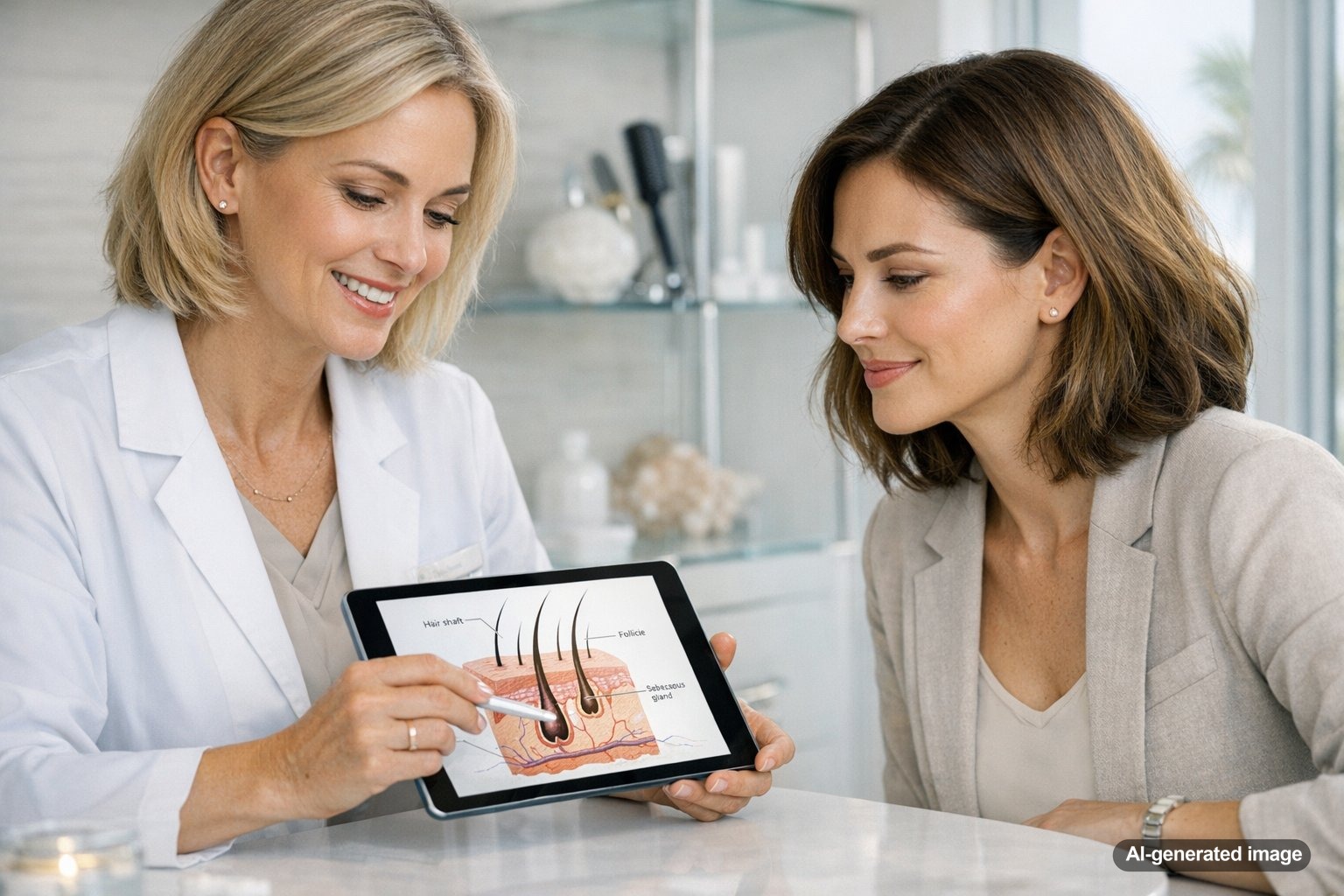
Your hair shaft is made of layers (like shingles on a roof) that help protect the inner structure. High heat can disrupt these layers, drive off moisture, and make the strand less flexible. Over time, that can show up as dullness, rough texture, increased tangling, breakage, and split ends.
Common causes and triggers
- High temperatures, especially with flat irons and curling irons
- Multiple passes over the same section of hair
- Using hot tools on damp hair
- Skipping heat protectant or using too little
- Heat plus chemical processing (coloring, bleaching, relaxing, perms)
- Rough handling (aggressive brushing, tight elastics, friction from towels)
- Environmental stressors (sun, salt water, pool chlorine) layered on top of heat
What you can do at home
Start with temperature and technique. If you feel like you need the highest setting to get results, it may be a sign your technique or prep could be adjusted. Work in small sections, use slow controlled passes, and avoid repeated passes on the same strand.
Dry thoroughly before hot tools. Flat ironing or curling damp hair can be especially harsh. If you blow-dry, focus on getting hair mostly dry with gentle airflow, then finish with a lower-heat setting as needed.
Use a heat protectant every time. Heat protectants are designed to help reduce friction and moisture loss at the surface. Apply evenly, focusing on mid-lengths and ends, and let it distribute before you style.
Reduce frequency and stack your styling days. Many people find it helpful to style with heat less often, then maintain the look with low-tension, low-friction habits (looser updos, silk or satin pillowcases, and gentle detangling).
Protect the ends. Ends are older hair and tend to be more fragile. Conditioning after every wash, limiting tension from tight styles, and trimming split ends when they appear can help keep breakage from traveling upward.
Adjust your wash and conditioning routine. If your hair feels brittle, consider a more conditioning-forward routine. Look for formulas labeled for damaged hair and focus on slip (easy detangling) to reduce mechanical breakage.
Be cautious with DIY “repair” claims. Once a strand is significantly split, products can temporarily smooth and improve feel, but they cannot permanently fuse hair back together. A conservative approach is to focus on prevention, conditioning, and gentler styling.
Professional options
If heat damage is persistent or you are seeing ongoing breakage, a professional assessment can help you sort out what is happening and what to prioritize.
- Hair and scalp evaluation: A clinician can look for patterns that suggest breakage, shedding, or scalp inflammation.
- Personalized routine guidance: Product selection and styling habits can be tailored to your hair type and goals.
- In-office treatment planning: If there is concern for a scalp condition or a hair loss pattern, your dermatologist can discuss high-level options and next steps.
When to see a dermatologist
Heat damage is common, but some signs deserve a closer look, especially if you are unsure what is causing the change.
- Sudden or patchy hair loss
- Scalp pain, burning, itching, or persistent flaking
- Widening part, thinning at the crown, or recession at the hairline
- Breakage that continues despite reducing heat and improving care
- New sores, oozing, or signs of infection on the scalp
- Hair changes after a new medication, illness, or major stressor
FAQ
Is blow-drying safer than a flat iron? It depends on temperature, technique, and frequency. Blow-drying on a moderate setting with movement can be gentler than repeated high-heat passes with a flat iron, but either can contribute to damage if used too hot or too often.
Do I need a heat protectant every time? If you use a hot tool, it is a practical step. Many people find it helps hair feel smoother and reduces friction during styling, especially at the ends.
Can damaged hair be reversed? Conditioning and smoothing products can improve look and feel, but they do not permanently restore a severely split strand. Prevention, gentler habits, and trimming when needed usually help the most.
How do I choose a heat setting? Choose the lowest setting that achieves your goal with good technique. If you need extreme heat to get results, reducing passes, improving prep, and adjusting your tool or section size may help.
Could heat styling cause hair loss? Heat more commonly causes breakage (shorter pieces, frizz, and thinning at the ends). True shedding or patchy loss can have other causes, so if you are seeing changes at the scalp, a dermatologist can evaluate.
Ready to get help?
Schedule an appointment or send a message and our team will get back to you.
Prefer to call? 954-666-3736
Disclaimer: This article is for educational purposes and is not medical advice. For diagnosis and personalized treatment, please book an appointment with a board-certified dermatologist.
