

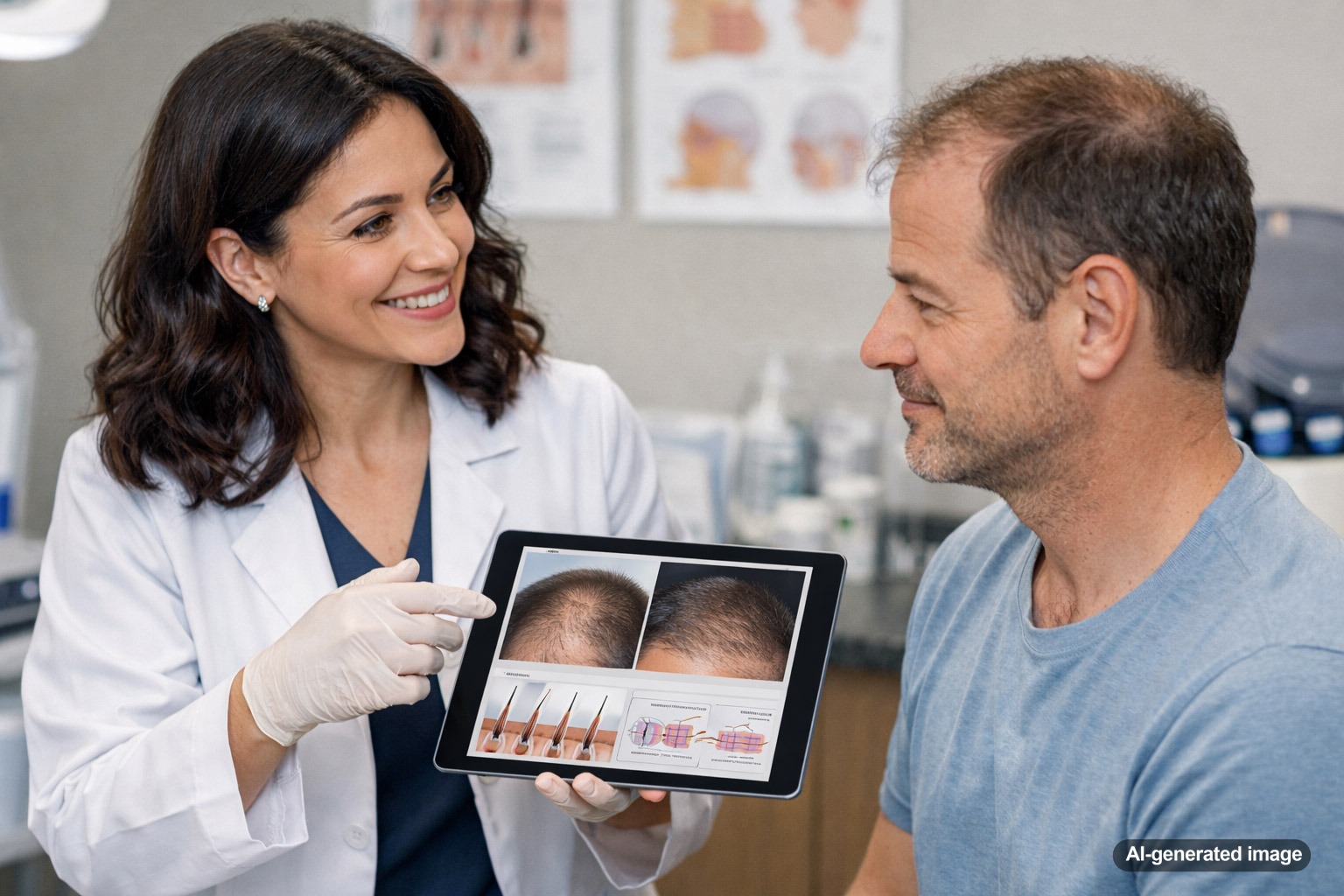
Noticing more shedding or a widening part can feel unsettling. PRFM is one option some people choose when they want a science-forward, office-based approach to support fuller-looking hair over time.
Quick answer
- PRFM uses a concentrated portion of your own blood components, prepared in-office and placed into targeted scalp areas.
- Appointments are typically straightforward, with brief numbing and small injections across the scalp.
- Results vary, and it often works best when the underlying cause of thinning is identified and addressed.
- Your dermatologist can help determine whether PRFM makes sense for your pattern of hair changes and goals.
What it is (plain English)
PRFM stands for platelet-rich fibrin matrix. In simple terms, a small blood draw is processed to concentrate naturally occurring components that may support the scalp environment. That preparation is then placed into specific scalp areas using small injections. Because PRFM is derived from your own blood, it is sometimes described as an autologous treatment.
Common causes and triggers
Hair thinning can have more than one driver, and that is why evaluation matters. Common contributors include:
- Genetics (pattern thinning)
- Hormonal shifts (including postpartum changes or perimenopause)
- Stress on the body (illness, major life stress, surgery)
- Nutritional gaps (for example, low iron or inadequate protein intake)
- Scalp inflammation or irritation
- Traction from tight styles or extensions
- Medication-related shedding (in some cases)
What you can do at home
At-home support will not replace a diagnosis, but it can help you protect the hair and scalp you have while you explore options:
- Be gentle with styling: avoid tight ponytails, heavy extensions, and frequent high-heat tools.
- Choose a simple scalp routine: cleanse regularly, avoid harsh scrubs, and limit fragranced products if you are prone to irritation.
- Prioritize basics: consistent sleep, balanced meals with adequate protein, and steady hydration.
- Track changes: note shedding, itch, flaking, recent stressors, and any new supplements or medications.
- Bring photos: a few well-lit scalp photos over time can help you and your clinician spot patterns.
Professional options
PRFM is one of several in-office approaches a dermatologist may discuss, depending on the cause of thinning and your medical history. Common categories include:
- In-office regenerative treatments (such as PRFM) aimed at supporting the scalp and follicle environment
- Prescription or over-the-counter therapies that may help some people, based on diagnosis and suitability
- Scalp care plans to reduce inflammation, buildup, or irritation
- Lab evaluation when nutrient status or hormone shifts may be contributing
At Waverly DermSpa, we offer PRFM for Hair Loss and can help you understand whether it may be appropriate.
When to see a dermatologist
It is worth scheduling an evaluation if you notice any of the following:
- Sudden or rapid shedding
- Patchy hair loss, broken hairs, or bald spots
- Scalp pain, burning, significant itching, crusting, or bleeding
- Thinning with new fatigue, heavy menstrual bleeding, or other systemic symptoms
- Hair loss after a new medication (do not stop a medication without medical guidance)
- No improvement after several months of gentle at-home changes
FAQ
Does PRFM hurt? Many people describe pressure or a brief pinching sensation. Numbing strategies can help, and comfort levels vary.
How many sessions will I need? There is no one-size plan. Your dermatologist may recommend a series based on your pattern of thinning and how your scalp responds.
When will I see results? Hair growth cycles are slow, and changes can be subtle at first. Some people notice improved shedding or fullness over time, but outcomes vary and are not guaranteed.
Can PRFM be combined with other treatments? Sometimes, yes. Combination plans are common in hair restoration, and your clinician can help choose a conservative, coordinated approach.
Who is not a good candidate? Suitability depends on your health history, medications, and the cause of hair loss. A dermatology visit is the safest way to determine fit and discuss alternatives.
Ready to get help?
Schedule an appointment or send a message and our team will get back to you.
Prefer to call? 954-666-3736
Disclaimer
This article is for educational purposes and is not medical advice. For diagnosis and personalized treatment, please book an appointment with a board-certified dermatologist.
