

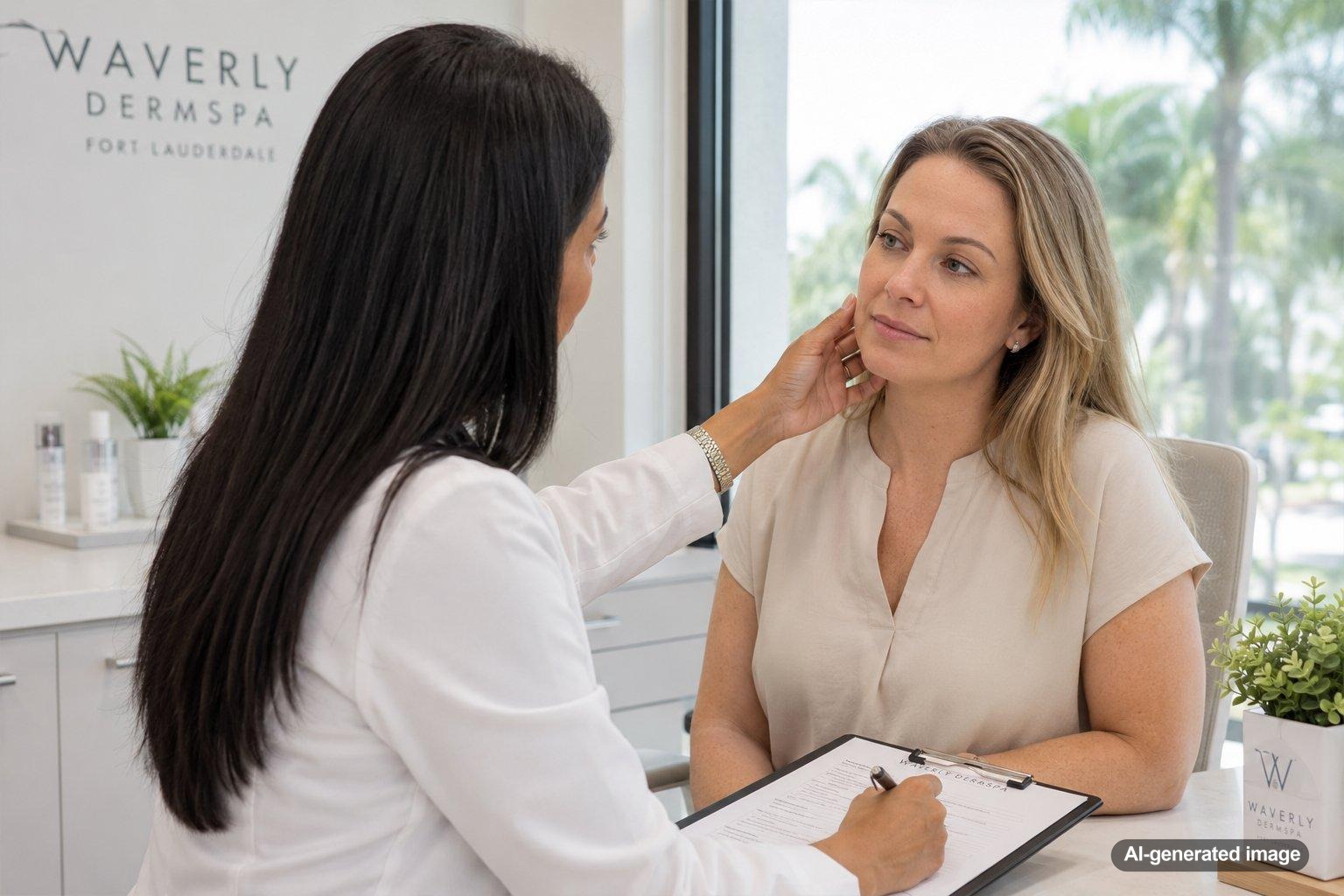
Many skin changes are common, but that does not make them easy to interpret. A rash, new bump, flaky patch, recurring breakout, or changing mole can feel confusing, especially when several conditions can look similar at first glance.
The 10 most common skin disorders include acne, eczema, psoriasis, rosacea, contact dermatitis, hives, fungal infections, warts, seborrheic dermatitis, and skin cancer or suspicious lesions. Some are usually mild, some are chronic, and some deserve prompt medical evaluation, so a dermatologist can help sort out what is happening and what options may be appropriate.
Quick answer
- Common skin disorders can involve breakouts, redness, scaling, itching, discoloration, bumps, hair or nail changes, or growths.
- Many conditions overlap in appearance, so self-diagnosis can be unreliable.
- Seek dermatology care for a changing mole, non-healing sore, painful rash, rapidly spreading rash, signs of infection, or symptoms that keep recurring.
- Gentle skin care, sun protection, and avoiding known triggers may help support many conditions while you arrange appropriate care.
1. Acne
Acne is a very common skin disorder that can show up as whiteheads, blackheads, inflamed pimples, deeper tender bumps, or clogged pores. It often affects the face, chest, shoulders, and back, and it can happen during the teen years or well into adulthood.
Breakouts may be associated with oil production, clogged pores, inflammation, bacteria on the skin, hormones, certain products, or friction from masks, helmets, or tight clothing. At home, many people do best with a simple routine: gentle cleanser, non-comedogenic moisturizer, daily sunscreen, and avoiding picking. A dermatologist can evaluate acne severity and discuss options such as topical medications, oral medications, in-office care, or scar-prevention strategies when appropriate.
2. Eczema
Eczema is a group of inflammatory skin conditions that can cause dry, itchy, sensitive, rough, or inflamed patches. Atopic dermatitis is one familiar form, but irritation, allergies, climate, stress, and skin barrier weakness can all play a role in eczema-like flares.
For many people, conservative support starts with fragrance-free moisturizers, short lukewarm showers, gentle cleansers, and avoiding personal triggers when they are known. Persistent itching, cracked skin, sleep disruption, or recurrent flares are good reasons to see a dermatologist. Prescription creams, anti-inflammatory therapies, and careful trigger review may be considered after an exam.
3. Psoriasis
Psoriasis is an inflammatory condition that often causes thick, scaly, itchy, or uncomfortable plaques. It commonly appears on the scalp, elbows, knees, trunk, hands, feet, or nails, although it can affect many areas of the body.
Psoriasis can flare and calm over time, and it may be associated with immune system activity. Some people also experience nail changes or joint symptoms, which should be discussed with a clinician. Dermatology options may include topical medications, light-based approaches, oral medications, or biologic therapies depending on the type, extent, and overall health context.
4. Rosacea
Rosacea is a chronic facial skin condition that may cause flushing, persistent redness, visible blood vessels, acne-like bumps, stinging, sensitivity, or eye irritation. It often affects the cheeks, nose, chin, and forehead, and symptoms can vary from person to person.
Common triggers can include sun exposure, heat, alcohol, spicy foods, stress, and certain skin care products, although triggers are highly individual. Gentle skin care and daily mineral or broad-spectrum sunscreen may help reduce irritation. A dermatologist can help distinguish rosacea from acne, dermatitis, or other causes of redness and can discuss topical, oral, laser, or light-based options when appropriate.
5. Contact dermatitis
Contact dermatitis is a rash that can happen when the skin reacts to something it touches. Irritant contact dermatitis can occur from repeated exposure to harsh soaps, cleaning products, fragrances, or friction. Allergic contact dermatitis can happen when the immune system reacts to a specific ingredient, metal, plant, or product.
The rash may look red, itchy, swollen, flaky, cracked, or blistered depending on skin tone, location, and severity. Avoiding the suspected trigger is often the first step, but it is not always easy to identify. If the rash keeps returning, patch testing or dermatology evaluation may help clarify the cause.
6. Hives
Hives, also called urticaria, are raised welts that can itch, burn, or move around the body. Individual spots may come and go, sometimes changing shape or location within hours.
Hives can be associated with infections, medications, foods, heat, cold, pressure, stress, or unknown triggers. Because swelling of the lips, tongue, throat, or trouble breathing can be urgent, those symptoms need immediate medical attention. For recurrent or ongoing hives, a dermatologist or allergy-focused clinician can help evaluate patterns and discuss safe management options.
7. Fungal skin infections
Fungal skin infections can affect the body, feet, groin, scalp, or nails. Ringworm, athlete’s foot, jock itch, and some fungal nail infections are common examples, and they may cause itching, scaling, cracking, circular patches, thickened nails, or discoloration.
Keeping skin clean and dry, changing sweaty clothing, not sharing towels, and wearing breathable footwear may help reduce spread or recurrence. Because fungal rashes can resemble eczema, psoriasis, or other rashes, testing or evaluation may be helpful before using the wrong product for a long time. Scalp involvement, nail involvement, widespread rash, or symptoms that do not improve deserve dermatology care.
8. Warts
Warts are skin growths caused by certain viruses that affect the top layer of skin. They may appear on the hands, feet, face, or other areas and can look rough, flat, raised, or thickened depending on the type and location.
Some warts are uncomfortable, spread, or become frustrating because they can persist. Avoid picking, shaving over them, or sharing personal items that touch the area. A dermatologist can help confirm whether a growth is a wart and discuss options such as topical treatments, freezing, or other office-based approaches when appropriate.
9. Seborrheic dermatitis
Seborrheic dermatitis is a common cause of flaking, redness, itching, or greasy scale, especially on the scalp, eyebrows, around the nose, ears, chest, or beard area. On the scalp, it is often associated with dandruff-like flaking.
Symptoms can come and go, and flares may be influenced by stress, weather shifts, skin oiliness, or other factors. Over-the-counter dandruff shampoos may help some scalp symptoms, but persistent facial redness, thick scale, or irritation should be evaluated. A dermatologist can help distinguish it from psoriasis, eczema, fungal concerns, or product irritation.
10. Skin cancer and suspicious lesions
Skin cancer and suspicious lesions are important to include because early evaluation can matter. Warning signs may include a new or changing mole, a sore that does not heal, a rough or bleeding spot, a growing bump, or a lesion that looks different from others on your skin.
Sun exposure is a major risk factor for many skin cancers, but skin cancer can occur in many skin tones and in areas that do not receive obvious daily sun. Use broad-spectrum sunscreen, protective clothing, shade, and regular skin awareness as practical support. If something is changing, bleeding, painful, growing, or simply concerning, a board-certified dermatologist can examine it and decide whether monitoring, treatment, or biopsy should be considered.
FAQ
How do I know which skin disorder I have?
You usually cannot know for certain from appearance alone. Many rashes, bumps, and patches overlap, so a dermatologist may use your history, exam findings, and sometimes testing to guide next steps.
When should a rash be checked?
Consider getting checked if a rash is painful, spreading, blistering, infected-looking, recurring, affecting the eyes or genitals, associated with fever, or not improving with gentle care.
Are common skin disorders contagious?
Some can be contagious, such as certain fungal infections and some warts. Others, such as acne, eczema, psoriasis, and rosacea, are not contagious. When you are unsure, it is worth getting evaluated.
Can stress affect skin disorders?
Stress may be associated with flares for some people, especially with inflammatory or chronic conditions. It is rarely the only factor, but it can be part of the bigger picture.
What should I do before my dermatology appointment?
Bring a list of products and medications, note when the issue started, take photos if it changes, and avoid heavy cover-up if possible so the area can be examined clearly.
Ready to get help?
Schedule an appointment or send a message and our team will get back to you.
Prefer to call? 954-666-3736
This article is for educational purposes and is not medical advice. For diagnosis and personalized treatment, please book an appointment with a board-certified dermatologist.
Sources & further reading
- American Academy of Dermatology (AAD) – Diseases and conditions
- MedlinePlus (NIH) – Skin Conditions
- Centers for Disease Control and Prevention (CDC) – Ringworm Basics
- Mayo Clinic – Skin cancer symptoms and causes
- Mayo Clinic – Atopic dermatitis eczema symptoms and causes
