

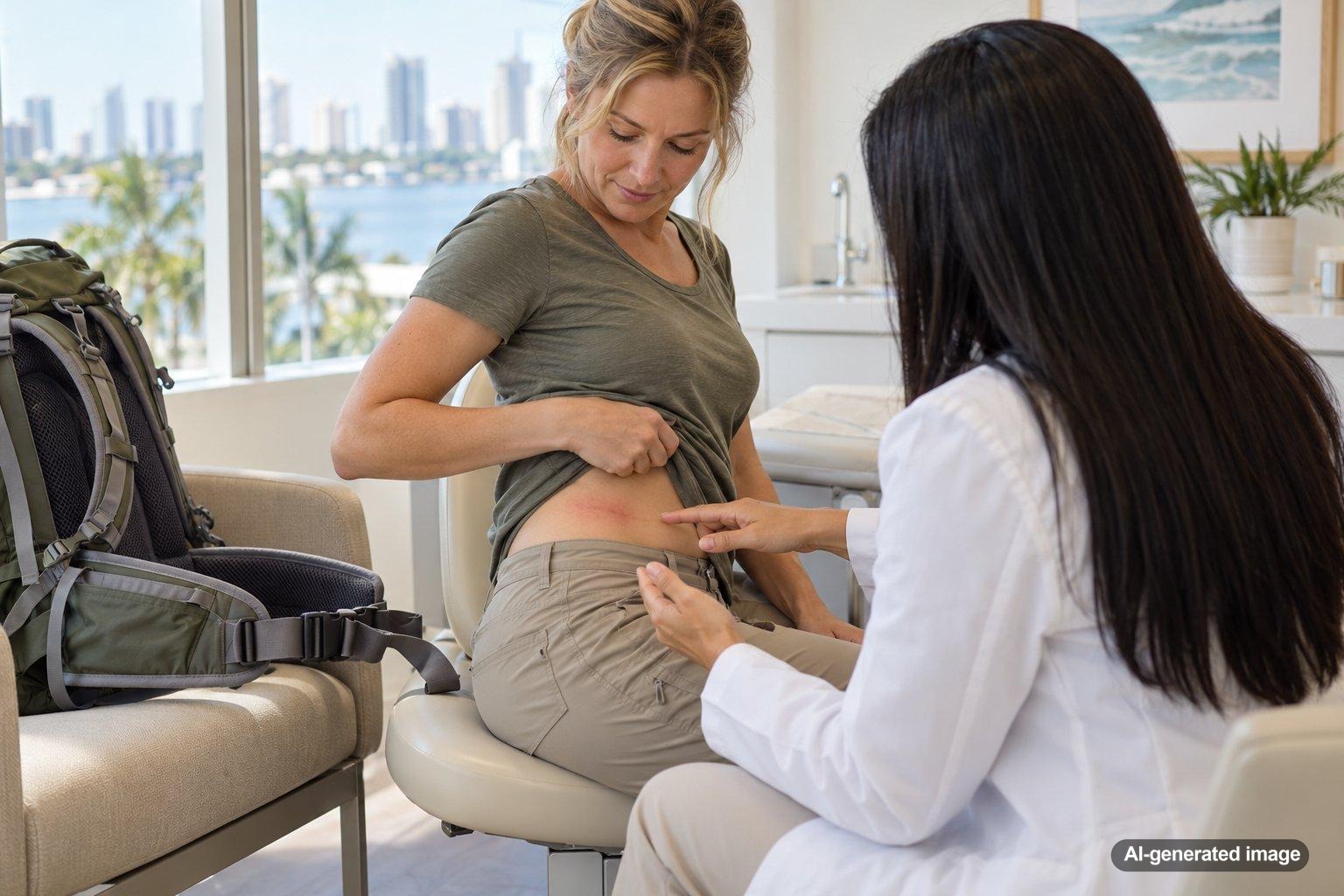
A rash under a backpack waist strap often develops because the strap repeatedly rubs against your skin while trapping heat and sweat. The combination can irritate the outer skin barrier, especially during long walks, hikes, travel days, or outdoor activities in warm weather. Sometimes the problem is simple chafing. In other cases, the skin may be reacting to a material, dye, rubber component, or cleaning product that comes into contact with the waist belt.
The location of the rash can offer useful clues, but appearance alone does not establish the cause. A patch that burns immediately after a hike may have a different explanation from an intensely itchy rash that develops the following day. Understanding these patterns can help you make sensible adjustments and recognize when a dermatologist should evaluate the irritation.
Quick Answer: Why Does a Backpack Waist Strap Cause a Rash?
- Repeated friction: A moving waist belt can rub the same area with every step, causing chafing and surface inflammation.
- Trapped sweat: Moisture beneath a snug strap can increase irritation and make the skin more vulnerable to rubbing.
- Contact dermatitis: Some people react to fabric treatments, dyes, rubber additives, metal components, or detergent residue.
- Pressure and fit: A poorly positioned or excessively tight hip belt can concentrate rubbing along the waist or hip bones.
- Other skin conditions: Persistent or unusual irritation may involve an underlying inflammatory condition or, occasionally, an infection that requires a different approach.
What Is Happening to the Skin Beneath the Strap?
Your skin has a protective outer layer that helps retain moisture and limit exposure to irritants. When a backpack waist strap presses against this layer, repeated movement creates friction. Sweat can make the situation worse by increasing moisture and prolonging contact with fabric and other materials.
The resulting irritation may appear as redness, darker discoloration, tiny bumps, dryness, tenderness, or a burning sensation. On deeper skin tones, inflammation may look brown, purple, or darker than the surrounding skin rather than visibly red.
Because a backpack hip belt sits against the body for extended periods, the affected area may form a horizontal band or appear more prominently over the hip bones. The exact pattern depends on the belt’s design, clothing, body movement, and the underlying cause.
Not every rash beneath a waist belt is an allergy. Mechanical irritation can occur even when the backpack materials are completely tolerated by the skin.
Common Causes of a Rash Under a Backpack Waist Strap
Friction and Chafing
Chafing is one of the most straightforward explanations, particularly when a rash appears during or shortly after activity. Walking causes the backpack and body to move relative to each other. Even small amounts of repeated movement can irritate the same area over time.
Common contributing factors include a heavy backpack, an uneven load, a hip belt that shifts while walking, and clothing with thick seams beneath the strap. The irritation may sting or feel raw, especially when the affected skin is touched.
Sweat, Heat, and Occlusion
A snug waist belt limits airflow. During exercise or outdoor activities, sweat may remain against the skin instead of evaporating efficiently. The resulting warm, damp environment can aggravate friction and contribute to sweat-related skin irritation.
This can be particularly noticeable during humid Fort Lauderdale weather, outdoor sightseeing, long travel days, and hikes where the backpack stays on for several hours.
Small prickly or itchy bumps may suggest heat-related irritation, although similar bumps can occur with other conditions. The location beneath the strap is a clue rather than a diagnosis.
Irritant Contact Dermatitis
Irritant contact dermatitis occurs when repeated exposure to friction, moisture, detergents, or other irritating substances disrupts the skin barrier. It does not require an allergy.
For example, a belt repeatedly rubbing against damp skin may produce inflammation even if the fabric itself is not problematic. Detergent residue on clothing or a recently cleaned hip belt may add to the irritation.
Allergic Contact Dermatitis
Allergic contact dermatitis involves an immune response to a substance touching the skin. Possible triggers associated with clothing or equipment include textile dyes, finishing chemicals, certain rubber additives, and metal components.
Unlike simple chafing, allergic reactions may become noticeable hours or days after exposure. The affected skin can be intensely itchy, scaly, swollen, or occasionally blistered. A reaction may also occur with equipment that has been used previously without an obvious problem.
A dermatologist may consider patch testing when the history suggests an allergy and the responsible material remains unclear.
Preexisting Skin Sensitivity
People with eczema or a compromised skin barrier may find that pressure, sweat, and rubbing provoke irritation more easily. Fragranced body products, harsh cleansers, or repeated scratching can add to the problem.
However, developing a rash beneath a backpack strap does not automatically mean that someone has eczema or a chronic skin condition.
Possible Secondary Infection
When skin becomes cracked, raw, or persistently damp, bacteria or fungi may sometimes contribute to additional inflammation. This possibility becomes more important when the affected area develops drainage, crusting, unusual tenderness, or progressive spreading.
A rash beneath a backpack strap is not necessarily infectious, and the strap itself is not enough to determine whether an infection is present. Persistent or worsening symptoms should be assessed before selecting a medicated treatment.
How Can You Tell Whether It Is Chafing or Contact Dermatitis?
Timing, sensation, and the distribution of the rash can help guide an evaluation.
- Chafing: Often develops during activity or soon afterward, particularly where rubbing is greatest. Burning, stinging, and tenderness may be more noticeable than itching.
- Irritant dermatitis: May develop after repeated exposure to sweat, pressure, cleaning products, or friction. The skin may feel dry, sore, or uncomfortable.
- Allergic contact dermatitis: May appear after a delay and can cause pronounced itching, swelling, scaling, or small blisters.
- Heat-related irritation: May involve clusters of small bumps or a prickly sensation in areas where sweat is trapped.
- Possible infection: Increasing pain, warmth, swelling, drainage, or spreading redness or discoloration deserves medical attention.
These patterns overlap, so they should not be used as a definitive self-diagnosis. The same person can also experience more than one contributing factor at once.
What Can You Do at Home to Reduce Backpack Waist Strap Irritation?
For mild irritation without broken skin or concerning symptoms, conservative changes may help reduce further friction and give the affected area an opportunity to settle.
Give the Irritated Skin a Break
When practical, temporarily avoid wearing the backpack or using the waist belt that repeatedly rubs the irritated area. Continuing to create friction over tender skin can prolong discomfort.
If you must carry a backpack, consider reducing its weight, adjusting the fit, or using another carrying arrangement that does not press directly on the irritated skin.
Clean Gently and Dry Thoroughly
After sweating, gently wash the area with lukewarm water and a mild, fragrance-free cleanser. Pat the skin dry rather than scrubbing. Change out of damp clothing when possible.
Avoid applying harsh exfoliants, strongly fragranced products, or alcohol-based preparations to already irritated skin.
Reconsider Clothing Beneath the Hip Belt
A smooth, breathable layer between the belt and your skin may reduce direct contact with abrasive materials. Look for clothing without prominent seams directly beneath the strap.
Moisture-managing fabrics may be useful during active travel, but comfort varies. Some synthetic fabrics or textile treatments can irritate sensitive skin, so pay attention to how your skin responds rather than assuming one material works for everyone.
Check the Backpack’s Fit
A properly positioned hip belt should support the load without excessive slipping, pinching, or rubbing. Review the backpack manufacturer’s fitting guidance and examine whether the belt moves repeatedly across one sensitive area.
Pay particular attention to folded padding, rough edges, stiff seams, and hardware that contacts the skin. A heavily loaded or poorly balanced backpack may create unnecessary pressure.
Consider a Simple Barrier Product
For intact skin prone to friction, a thin layer of a bland, fragrance-free barrier product, such as petrolatum, may help reduce rubbing. Test any new product cautiously, since even products marketed for sensitive skin can occasionally cause irritation.
Do not rely on barrier products to conceal worsening irritation or apply them indiscriminately to an area that appears infected. Avoid experimenting with multiple medicated creams when the cause of the rash is uncertain.
Keep the Waist Belt Clean
Sweat, sunscreen, body products, and detergent residue may accumulate on backpack padding. Clean the waist belt according to the manufacturer’s instructions and allow it to dry completely before wearing it again.
If symptoms began after switching detergents, using a new cleaning spray, or purchasing a new backpack, consider whether that change could be relevant.
How to Prevent the Rash During Hiking and Travel
Prevention is often easier when you address several contributing factors together rather than focusing on the skin alone.
- Fit the backpack before a long outing. Check that the waist belt sits comfortably and does not shift with normal walking.
- Reduce unnecessary weight. A lighter, balanced load may decrease pressure and repetitive movement.
- Choose comfortable base layers. Avoid thick waist seams, rough labels, and fabric bunching beneath the belt.
- Take breaks when practical. Removing the backpack periodically can reduce prolonged contact and allow sweat to evaporate.
- Change damp clothing. Carrying a dry shirt can be useful on long hikes or humid travel days.
- Monitor early warning signs. Stinging, persistent itching, or a developing tender patch may indicate that an adjustment is needed.
- Keep equipment clean and dry. Follow manufacturer care instructions and avoid introducing strongly fragranced cleaning products.
If the same rash appears despite careful fit adjustments and changes in clothing, an evaluation may help identify whether a material sensitivity or another skin condition is involved.
What Can a Dermatologist Do for a Persistent Waist Strap Rash?
A dermatologist can examine the distribution and appearance of the rash and ask about when it develops, how long it lasts, and which materials contact the affected area.
Depending on the findings, professional options may include identifying and reducing an irritating exposure, recommending appropriate skin barrier care, or considering a topical anti-inflammatory medication for a diagnosed inflammatory condition. If an allergic reaction is suspected, patch testing may help identify particular allergens.
When the examination raises concern for a bacterial or fungal infection, the clinician may recommend additional testing or condition-specific treatment. Different causes can require different approaches, which is why repeatedly applying an unfamiliar medicated cream is not always helpful.
Bringing a photograph of the rash at its most noticeable, along with details about your backpack, clothing, and recent product changes, may make the appointment more informative.
When Should You See a Dermatologist?
Consider scheduling an evaluation if the rash repeatedly returns whenever you wear a backpack, persists after avoiding the suspected trigger, becomes increasingly uncomfortable, or develops scaling, cracking, or blistering.
You should also seek professional assessment if the rash extends beyond the area of strap contact, affects your daily activities, or leaves persistent discoloration after the initial irritation improves.
Seek prompt medical care for rapidly spreading redness or discoloration, significant warmth and swelling, increasing pain, pus, fever, or red streaking. These findings can be associated with infection and should not be managed as routine chafing. Severe allergic symptoms such as difficulty breathing or swelling of the tongue or throat require emergency care.
For an unexplained or recurring rash, a dermatologist can help distinguish mechanical irritation from contact dermatitis and other possible causes.
Frequently Asked Questions
Why does my backpack waist belt cause a rash even when it is not very tight?
Significant tightness is not required for friction irritation. Repeated small movements, a rough seam, damp fabric, or prolonged contact can irritate the skin. Material sensitivity may also play a role even when the belt fits comfortably.
Can I be allergic to my backpack’s waist strap?
Yes. Some people develop allergic contact dermatitis from substances associated with textiles, rubber components, finishes, dyes, or metal hardware. However, friction and irritant dermatitis are also possible explanations. A dermatologist may consider patch testing if an allergy is suspected.
Why does the rash appear the day after hiking?
Some inflammatory reactions become more noticeable after the activity ends. Allergic contact dermatitis can also develop after a delay. The timing alone cannot distinguish an allergy from irritation, but it is useful information to share with your clinician.
Can sweat alone cause a rash beneath a backpack belt?
Sweat can contribute to skin irritation, particularly when heat, moisture, and friction occur together. A tightly covered area may also develop heat-related bumps. The exact cause depends on the appearance of the rash and any other symptoms.
Should I use a steroid cream or antifungal cream for the rash?
Not every waist strap rash needs medication, and the appropriate treatment depends on the cause. A medication intended for one condition may be unsuitable for another. If the rash is persistent, unusual, or worsening, a dermatologist can help determine whether a medicated treatment is appropriate.
How long does a backpack strap rash take to go away?
Recovery varies with the severity of irritation, continued exposure, and whether another condition is present. Mild friction irritation may improve after rubbing stops, while contact dermatitis or an infection may require a different approach. A rash that fails to improve or repeatedly returns is worth evaluating.
Ready to get help?
Schedule an appointment or send a message and our team will get back to you.
Prefer to call? 954-666-3736
Disclaimer
This article is for educational purposes and is not medical advice. For diagnosis and personalized treatment, please book an appointment with a board-certified dermatologist.
Sources & further reading
- Cleveland Clinic – Chafing Causes, Treatment & Prevention
- American Academy of Dermatology (AAD) – Eczema types: Contact dermatitis signs and symptoms
- DermNet – Textile contact dermatitis
- American Academy of Dermatology (AAD) – Eczema types: Contact dermatitis diagnosis and treatment
