

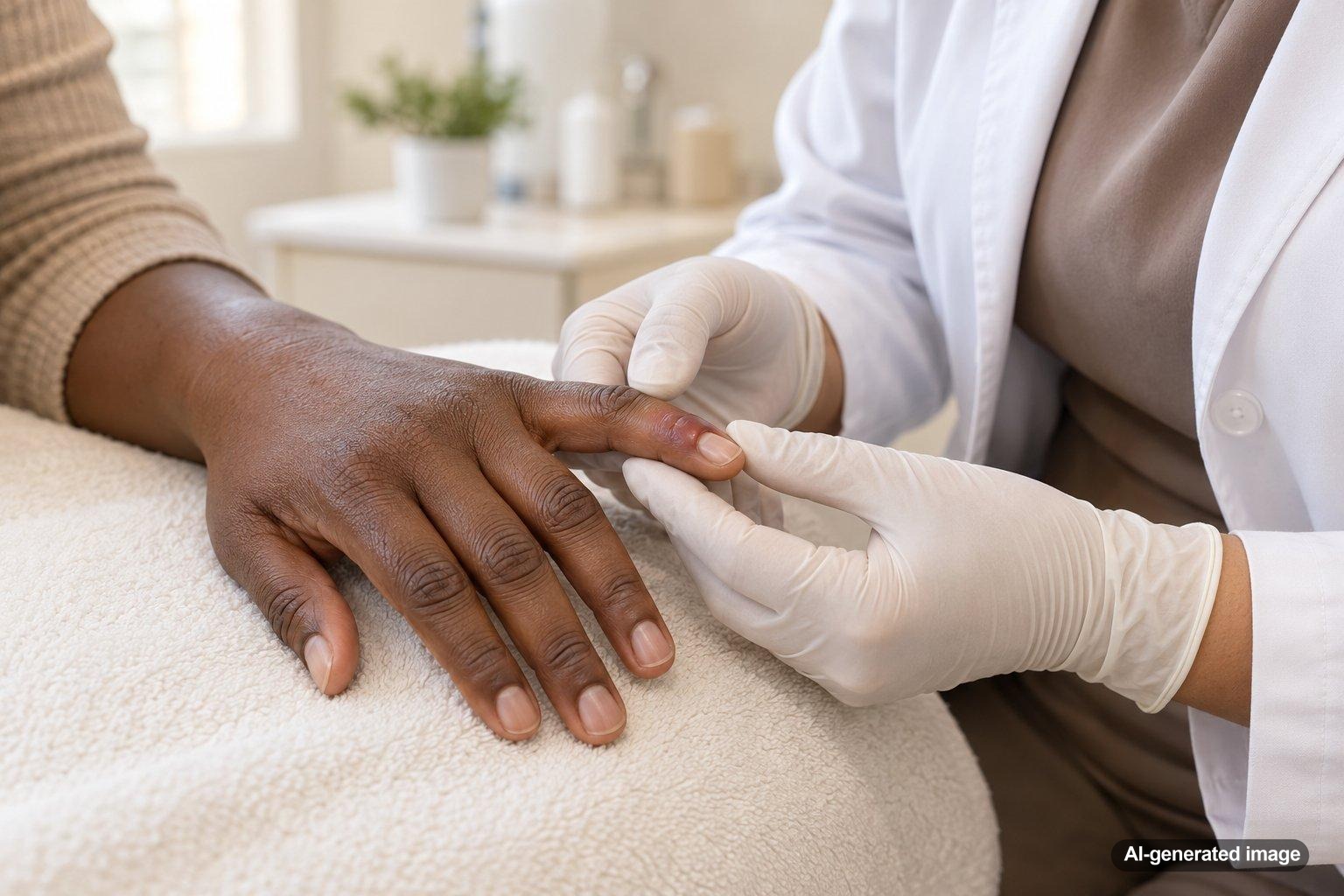
When the skin beside one fingernail keeps swelling, it can be puzzling, especially when there is no visible pus, drainage, or obvious injury. The area may look slightly pink, feel tender when pressed, or become puffy for several days before settling down. Then, just when it seems normal again, the swelling returns.
Recurring swelling around a single nail can develop from repeated irritation, minor trauma, an inflammatory skin condition, or an infection that does not produce a visible pocket of pus. One possibility is paronychia, a term describing inflammation of the skin surrounding a nail. However, not every swollen nail fold is infected, and the absence of pus does not establish a specific diagnosis. Understanding what repeatedly irritates the area can help guide the next step.
Quick Answer: Why Does One Nail Fold Keep Swelling?
- Repeated irritation: Water, cleaning products, manicures, and frequent contact with the cuticle can inflame the skin.
- Chronic paronychia: Persistent inflammation of the nail fold may cause swelling and tenderness without obvious pus.
- Minor trauma: Picking, nail biting, hangnails, or pressure against the nail can repeatedly disturb the surrounding tissue.
- Inflammatory skin conditions: Contact dermatitis and other skin conditions can affect the nail fold.
- Occult or developing infection: Some infections cause swelling before drainage appears, and others may never produce visible pus.
The most useful clues include how long the swelling lasts, whether the cuticle is intact, what activities aggravate it, and whether the nail itself has changed.
What Is the Swollen Skin Beside the Nail?
The skin surrounding the edges and base of a fingernail forms the nail folds. These folds protect the delicate structures responsible for nail growth and help create a barrier against moisture, irritants, and microorganisms.
The cuticle is part of this protective system. It forms a seal between the nail plate and the skin near the nail base. When that seal is disrupted, the surrounding tissue becomes more vulnerable to irritation and inflammation.
Paronychia is the medical term for inflammation involving a nail fold. It may be acute, developing relatively quickly, or chronic, persisting or recurring over a longer period. Acute paronychia is frequently associated with bacterial infection, while chronic paronychia often involves ongoing irritation and dermatitis, sometimes with microorganisms contributing to the problem.
Chronic nail fold inflammation can make the skin appear rounded, puffy, or slightly separated from the nail. In some cases, the cuticle becomes less distinct, and the nail eventually develops ridges or surface irregularities. These findings require clinical interpretation rather than self-diagnosis.
Common Reasons the Skin Beside One Nail Keeps Swelling
Repeated Exposure to Water and Cleaning Products
Frequent handwashing, dishwashing, cleaning, and prolonged wet work can repeatedly disturb the skin barrier around a nail. Soap and detergents may further aggravate the area, particularly if the cuticle is already damaged.
Although both hands may experience similar exposures, one finger may receive more friction or have an existing weak point in its protective barrier. The resulting inflammation can fluctuate as exposure changes.
Cuticle Picking, Nail Biting, or Manicure Trauma
Small injuries are not always memorable. Pushing back cuticles, clipping them too closely, removing a hangnail, or repeatedly rubbing one nail fold can create tiny disruptions in the skin.
Even when the initial injury appears to heal, continued manipulation may prevent the area from settling completely. Gel nail removal, artificial nails, and certain manicure products can also contribute to irritation or contact reactions.
Chronic Paronychia
Chronic paronychia is particularly relevant when swelling repeatedly develops around the same nail without a noticeable collection of pus. The condition often reflects an ongoing inflammatory process involving the nail fold and its protective cuticle barrier.
Redness may be subtle, especially in deeper skin tones, where inflammation can appear darker or more violet than bright red. Tenderness may come and go. The skin near the cuticle can look thickened or slightly raised.
Although yeast or bacteria may be present, chronic paronychia is not necessarily a straightforward fungal or bacterial infection. Treating irritation and protecting the nail fold may be important parts of a clinician-directed management plan.
Contact Dermatitis or Another Inflammatory Skin Condition
Contact dermatitis can develop when the skin reacts to an irritating substance or an allergen. Nail cosmetics, adhesives, cleaning solutions, and repeated moisture exposure are possible contributors.
Inflammatory conditions such as eczema or psoriasis may also affect skin near the nail or alter nail appearance. A clinician can assess whether inflammation around a single nail represents a localized reaction or part of a broader skin condition.
Pressure, Ingrown Nail Edges, or Repetitive Friction
Sometimes the swelling is concentrated along one side of the nail rather than near the cuticle. An irregular nail edge, repetitive pressure, or minor trauma may be responsible.
This is especially relevant for toenails exposed to tight footwear, although fingernails can also experience repeated pressure during work, hobbies, or grooming.
Less Common Nail Fold Abnormalities
Persistent swelling near only one nail occasionally involves a localized cyst, another growth, or a structural nail problem rather than routine irritation. Certain growths can alter the contour of the nail or produce a groove in the nail plate.
Unusual lesions around or beneath a nail deserve professional assessment, particularly when they persist, enlarge, bleed, or cause progressive nail changes. A dermatologist can determine whether closer examination or additional testing is appropriate.
Why Can a Nail Fold Be Swollen Without Any Pus?
Pus is associated with certain infections, particularly when inflammatory cells and microorganisms collect within an abscess. However, swelling itself simply indicates that fluid and inflammatory activity are affecting the surrounding tissues.
In irritant dermatitis or chronic inflammatory nail fold disease, the tissue may become swollen without forming an abscess. Similarly, early infection can produce tenderness and swelling before a visible collection develops.
No visible pus does not rule out infection. It also does not mean antibiotics are automatically necessary. The appropriate approach depends on whether the underlying process is inflammatory, infectious, mechanical, or related to another nail condition.
Why Does the Swelling Keep Returning to the Same Finger?
Recurring inflammation in one location often suggests that the local trigger has not fully resolved. A cuticle that no longer forms an effective seal can allow repeated exposure to moisture and irritants. A rough nail edge may continue to rub against nearby skin. A habitual picking motion may affect the same finger day after day.
For example, someone who frequently handles wet towels, cleaning supplies, or beauty products may repeatedly irritate one particular nail fold. Another person may unconsciously pick at a single cuticle during stressful moments.
Persistent swelling confined to one nail also warrants attention because localized structural abnormalities can sometimes resemble ordinary inflammation. The pattern is informative, but it is not diagnostic by itself.
What You Can Do at Home Without Making the Swelling Worse
When symptoms are mild and there are no concerning signs of infection, conservative nail care may help reduce repeated irritation while the cause is being evaluated.
- Leave the cuticle intact. Avoid cutting, pushing, or picking at swollen skin around the nail.
- Reduce prolonged wet exposure. Dry hands gently after washing, paying attention to the nail folds.
- Protect hands during wet work. Consider waterproof gloves with a comfortable cotton lining when handling water or cleaning products.
- Use a simple moisturizer. A fragrance-free hand cream or ointment may help support the surrounding skin barrier.
- Pause potentially irritating nail products. Consider avoiding artificial nails, aggressive manicures, and products that appear to aggravate the area.
- Avoid squeezing or puncturing the swelling. Attempting to drain an area without a confirmed abscess can injure the skin and introduce infection.
- Observe the pattern. Notice whether swelling follows particular tasks, manicure appointments, or repeated contact with the nail.
Warm water soaks are sometimes recommended for certain acute nail fold problems, but prolonged moisture exposure can worsen chronic irritant-related inflammation. Because the underlying cause matters, persistent or recurrent symptoms are better assessed than managed with repeated soaking or over-the-counter medications chosen by guesswork.
Do not attempt to cut into the nail fold, remove part of the nail, or start leftover prescription medication without medical guidance.
How a Dermatologist Evaluates Recurring Nail Fold Swelling
A dermatology visit generally begins with examining the nail fold, cuticle, nail plate, and surrounding skin. The clinician may ask about how frequently symptoms recur, whether the swelling is painful or itchy, and whether the affected finger is exposed to water, chemicals, pressure, or nail products.
The appearance of the cuticle, location of swelling, and presence of nail ridging or discoloration may help distinguish chronic inflammation from an acute infection or another nail disorder.
Depending on the findings, professional options may include:
- Barrier-focused care: Guidance on reducing irritants, minimizing trauma, and protecting the cuticle.
- Anti-inflammatory treatment: Prescription topical medications may be considered when dermatitis or chronic inflammatory paronychia is identified.
- Infection-directed treatment: Antibiotic, antifungal, or other treatment may be appropriate when clinical findings support a specific infection.
- Additional evaluation: Testing may be considered when infection is uncertain, symptoms are atypical, or the condition does not respond as expected.
- Assessment of localized abnormalities: Persistent lumps, nail distortion, or unusual lesions may require specialized examination and occasionally a procedure or biopsy.
The goal is to identify the process sustaining the swelling rather than repeatedly treating the appearance alone. A dermatologist can help determine which approach fits the findings.
When Should You See a Dermatologist?
Recurring swelling beside the same nail is worth evaluating when it continues despite gentle care, returns repeatedly, or begins to change the nail’s shape or texture.
Arrange a medical assessment if you notice:
- Swelling that persists, repeatedly returns, or progressively enlarges.
- Increasing pain, warmth, redness, or discoloration around the nail.
- A damaged or missing cuticle accompanied by ongoing inflammation.
- New nail ridges, splitting, lifting, or unusual changes in nail growth.
- A persistent lump, unexplained bleeding, or a new or changing dark streak.
- Drainage, blisters, or skin changes that do not resemble ordinary irritation.
Seek prompt medical care if redness spreads, pain becomes severe, swelling increases rapidly, or fever develops. These symptoms can indicate an infection requiring timely assessment. People with diabetes, impaired circulation, or weakened immune systems should seek early evaluation when a nail fold appears infected rather than waiting for symptoms to progress.
Frequently Asked Questions
Can paronychia occur without pus?
Yes. Paronychia refers to inflammation around a nail, and visible pus is not required. Chronic paronychia commonly involves swelling, tenderness, and cuticle changes without an obvious abscess. A dermatologist can assess whether infection is also present.
Why is only one side of my fingernail swollen?
Localized irritation, a small injury, repeated friction, or an irregular nail edge may affect only one side. Infection and other nail fold conditions can also begin in a single location. Persistent one-sided swelling deserves evaluation, especially when the nail changes.
Can a manicure cause nail fold swelling days later?
Yes. Cuticle manipulation, filing, artificial nail products, and cosmetic ingredients may irritate the skin or disrupt its protective barrier. Symptoms may develop after the original exposure, and some reactions can recur with repeated product use.
Does swelling without pus mean I do not need antibiotics?
Not necessarily. The absence of pus cannot determine whether a bacterial infection exists. However, many chronic nail fold problems involve inflammation rather than an infection requiring antibiotics. A clinician can evaluate the cause before recommending medication.
Could eczema cause swelling beside a nail?
Yes. Eczema and contact dermatitis can involve the skin around the nail, sometimes producing swelling, tenderness, dryness, and cuticle damage. Repeated exposure to moisture or irritants may sustain the inflammation.
Should I worry if the same nail has been swollen for months?
Long-lasting swelling does not automatically indicate a serious condition, but it should not be ignored. Persistent changes affecting one nail may require examination to distinguish chronic inflammation from infection, structural problems, or less common growths.
Understanding the Pattern Is the First Step
Swelling beside one nail without pus is often related to irritation or inflammation, but appearance alone cannot reliably identify the cause. The location, recurrence pattern, cuticle condition, and accompanying nail changes all matter.
If the same nail fold keeps becoming swollen, a dermatology evaluation can help clarify what is driving the problem and whether additional treatment or testing is appropriate. Protecting the surrounding skin and avoiding repeated trauma are sensible steps while seeking individualized guidance.
Ready to get help?
Schedule an appointment or send a message and our team will get back to you.
Prefer to call? 954-666-3736
Disclaimer
This article is for educational purposes and is not medical advice. For diagnosis and personalized treatment, please book an appointment with a board-certified dermatologist.
Sources & Further Reading
- DermNet – Paronychia
- Cleveland Clinic – Nail Infection (Paronychia)
- American Academy of Dermatology (AAD) – 12 Nail Changes a Dermatologist Should Examine
