

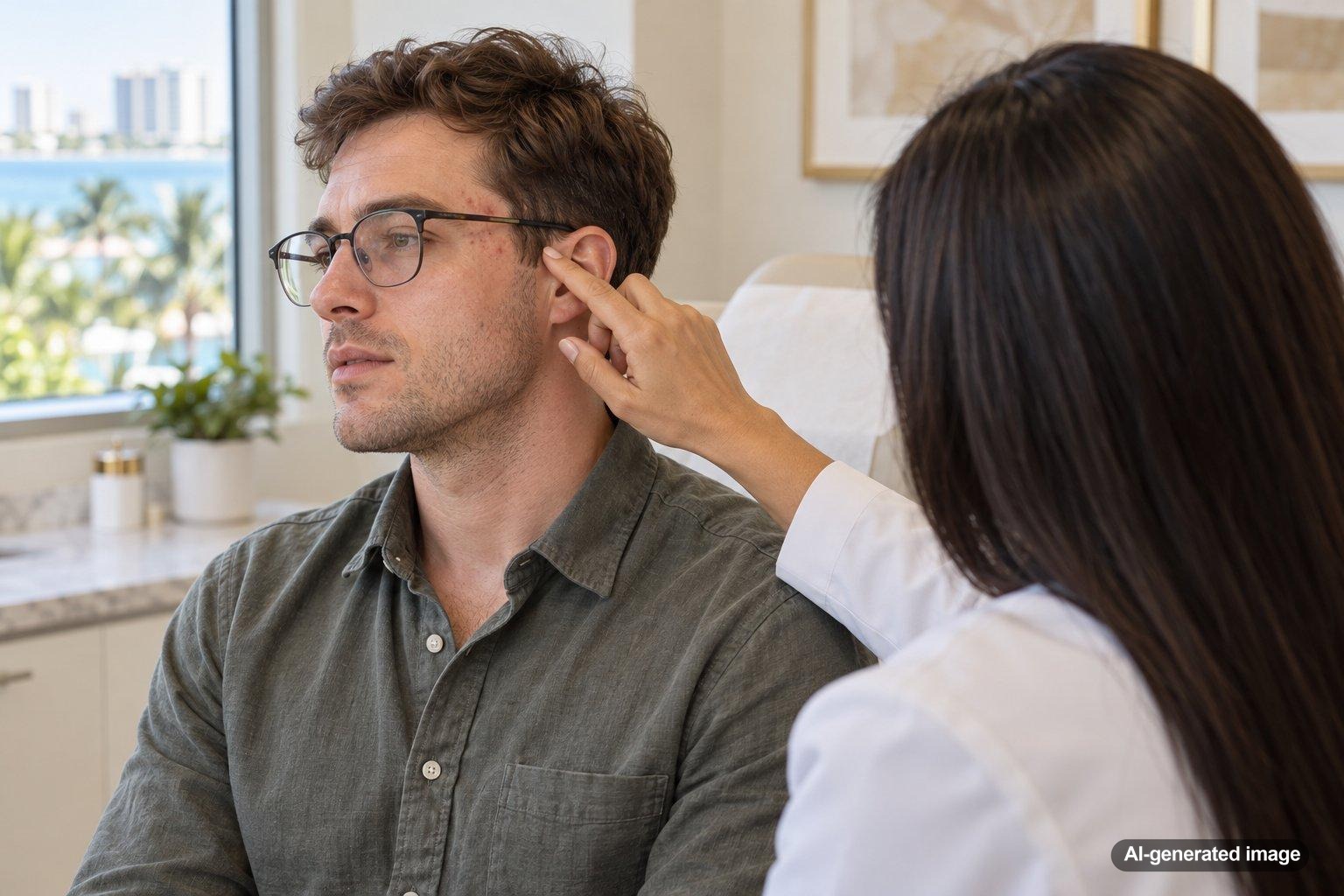
If you keep getting small pimples along your temples, especially where the arms of your glasses rest against your skin, your eyewear may be contributing to the problem. The combination of repeated friction, pressure, sweat, and trapped skin oils can create an environment where breakouts are more likely. Even glasses that feel comfortable can rub against the same small areas of skin throughout the day.
These bumps are not always ordinary acne, however. Some may be irritated hair follicles, while others may reflect a reaction to frame materials or products that collect around the temples. Understanding what the bumps look and feel like, along with when they appear, can help you make practical changes without unnecessarily complicating your skincare routine.
Quick Answer: Why Do Glasses Cause Pimples on Your Temples?
- Repeated friction: Glasses arms can rub against your skin and contribute to a type of breakout commonly called acne mechanica.
- Heat and moisture: Sweat and humidity beneath frames may make irritation and breakouts more noticeable.
- Skin oils and residue: Oil, sunscreen, makeup, and other products can collect on frames and repeatedly contact the skin.
- Frame pressure: Tight glasses may create persistent irritation at specific contact points.
- Material sensitivity: Some bumps may be related to contact dermatitis rather than acne, particularly when itching or a rash is present.
What Is Acne Mechanica?
Acne mechanica describes acne that develops or becomes worse in areas exposed to repeated pressure, friction, heat, or occlusion. It can occur beneath helmets, sports equipment, tight clothing, and other objects that remain in contact with the skin.
Eyeglasses can create similar conditions along the temples. The arms of the frames sit against relatively narrow strips of skin, often for many consecutive hours. As you talk, move your head, exercise, or adjust your glasses, subtle movement may create repeated rubbing in those areas.
For someone already prone to acne, this additional irritation can contribute to clogged pores and inflammatory bumps. The result may be a line or cluster of small pimples that follows the position of the glasses arms.
Not every bump beneath eyeglasses is acne mechanica. A dermatologist can examine the pattern and appearance of the lesions to distinguish acne from other possible causes.
Common Reasons Glasses Trigger Temple Breakouts
1. Friction From the Glasses Arms
The skin around your temples moves whenever you make facial expressions or turn your head. If your frames repeatedly slide or press against this area, the resulting friction may aggravate existing acne or contribute to new breakouts.
This can happen even with lightweight frames, particularly when they are worn all day. Glasses that frequently slip down your nose may also prompt repeated adjustments, increasing contact with the temples.
2. Sweat and Humidity Trapped Against the Skin
Warm, humid conditions can make the area beneath eyeglass frames more prone to moisture accumulation. In Fort Lauderdale, where outdoor heat and humidity are familiar parts of daily life, the combination of perspiration and prolonged frame contact may be particularly noticeable.
Exercise, outdoor activities, and long periods in the sun can add to this effect. Moisture does not automatically cause acne, but it can contribute to the conditions that aggravate friction-related breakouts.
3. Oil, Sunscreen, and Product Buildup
Eyeglass frames repeatedly contact skin that naturally produces oil. Sunscreen, moisturizer, foundation, and hair products may also transfer onto the arms of the glasses.
When residue accumulates, it can remain in contact with the same areas of skin throughout the day. This may contribute to irritation or make breakouts more difficult to manage, particularly if the products are heavy or tend to clog pores.
Hair styling creams, pomades, and conditioners are worth considering because they can reach the temples independently of your glasses.
4. Glasses That Fit Too Tightly
Frames that squeeze the sides of your head can place unnecessary pressure on the skin. You might notice soreness, indentations, or redness when you remove them.
Persistent pressure can make existing blemishes more uncomfortable and may contribute to friction-related irritation. An optical professional can evaluate the fit and adjust the frames when appropriate.
5. Sensitivity to Frame Materials
Sometimes the problem is not acne at all. Contact dermatitis can develop when skin reacts to substances in materials that touch it. Certain metals, including nickel, as well as some coatings or other frame components, may be relevant depending on the individual’s sensitivities.
Contact dermatitis often causes itching, redness, dryness, or scaling rather than classic pimples. Small bumps can occur, however, and the distribution may closely follow the parts of the frames touching the skin.
If a rash improves when you stop wearing a particular pair of glasses and returns when you wear them again, that pattern is worth discussing with a dermatologist. The pattern alone does not establish the diagnosis.
How Can You Tell Whether the Bumps Are Acne or Irritation?
The appearance and symptoms can provide useful clues, although they are not reliable enough for a self-diagnosis.
- Acne: May include whiteheads, blackheads, small inflamed bumps, or pustules. Some people develop deeper, tender lesions.
- Friction irritation: May produce localized redness, tenderness, or superficial bumps in areas exposed to repeated rubbing.
- Contact dermatitis: Often involves itching, redness, dry patches, or scaling, sometimes with small bumps.
- Folliculitis: Can produce bumps or pustules centered around hair follicles and may resemble acne.
The distribution matters, too. Bumps that consistently follow the glasses arms suggest that frame contact could be contributing, but this does not rule out other skin conditions. If you are uncertain about the cause, an examination can help avoid treatments that might worsen irritation.
What Can You Do at Home to Reduce Glasses-Related Breakouts?
Clean Your Glasses Regularly
Follow the manufacturer’s cleaning instructions and pay attention to the frame arms, nose pads, and areas that contact your face. An eyeglass-safe cleaner and a clean microfiber cloth can help remove accumulated skin oils and product residue.
Avoid harsh household cleaners or abrasive materials that could damage frame coatings or leave irritating residues. If your frames have delicate finishes, ask your optician which cleaning methods are appropriate.
Check the Fit of Your Frames
Glasses should feel secure without squeezing your temples. If the arms leave deep marks, cause soreness, or frequently slide out of position, consider having them professionally adjusted.
Reducing unnecessary friction may help minimize one possible contributor to breakouts. Avoid bending frames yourself unless the manufacturer specifically provides instructions for doing so.
Wash Your Face Gently
Use a mild cleanser to remove sweat, excess oil, and daily product residue. After exercising or spending time in humid conditions, gently cleansing the skin may be helpful.
Avoid aggressive scrubbing, cleansing brushes used with excessive pressure, or repeatedly washing the same area. These habits can irritate the skin barrier and make inflammation more noticeable.
Choose Products That Suit Acne-Prone Skin
If you are prone to breakouts, look for facial moisturizers and sunscreens labeled noncomedogenic or oil-free when appropriate for your skin. These labels can help guide product selection, although no product is suitable for everyone.
Because the temples are close to the hairline, also consider whether styling products are transferring onto your skin or glasses. Keeping heavy hair products away from the temple area may be a useful adjustment.
Avoid Picking or Squeezing the Bumps
Picking can increase inflammation and may contribute to discoloration or scarring. This is particularly important when the affected skin is already experiencing repeated contact with eyeglass frames.
If a bump is tender, avoid repeatedly pressing on it to determine whether it is improving.
Be Careful With Acne Treatments Near Your Eyes
Some over-the-counter acne products contain ingredients such as salicylic acid or benzoyl peroxide. These may be appropriate for certain types of acne, but they can also cause dryness or irritation.
The temples are near the eyes, so use products only as directed and keep them away from the eyes and eyelids. Avoid applying active acne products to skin that appears raw, severely irritated, or affected by an unexplained rash without professional guidance.
If you have sensitive skin or are unsure whether the bumps are acne, a dermatologist can help determine whether an acne treatment is appropriate.
What Professional Treatments May Help?
When temple breakouts persist despite practical changes, the most useful next step is identifying the underlying cause rather than simply adding stronger products.
A dermatologist may evaluate whether the bumps are consistent with acne, contact dermatitis, folliculitis, or another condition. The appearance, symptoms, product history, and relationship to frame contact can help guide that assessment.
For acne, professional options may include a personalized skincare plan, topical medications, or other therapies selected according to the type and severity of the breakouts. If contact dermatitis is suspected, identifying and avoiding the relevant material may be more important than using conventional acne products. Patch testing may be considered in selected cases.
For suitable patients, professional skincare services may support an overall acne management plan, but treatments should be selected according to the condition of the skin. Irritated or inflamed areas may require a gentler approach.
At Waverly DermSpa, we offer Chemical Peels and can help you understand whether they may be appropriate. They are not necessary for every case of temple acne, and reducing the underlying friction or irritation may be a more relevant first step.
When Should You See a Dermatologist?
Occasional small pimples may improve with gentle skincare and adjustments to your eyewear. A professional evaluation becomes more important when symptoms persist, worsen, or suggest something other than routine acne.
Consider scheduling an appointment if:
- The bumps repeatedly return in exactly the same locations despite cleaning and adjusting your glasses.
- You develop deep, painful, or persistent lesions.
- The skin becomes intensely itchy, scaly, cracked, or unusually sensitive.
- Breakouts leave dark marks, discoloration, or scars.
- You notice pustules, crusting, or other changes that raise concern about an infection.
- You are unsure whether the bumps represent acne, dermatitis, or another skin condition.
Seek prompt medical assessment for rapidly spreading redness, significant swelling, increasing warmth or pain, fever, or symptoms involving the eye. These changes should not be assumed to be ordinary acne from eyeglasses.
Frequently Asked Questions
Can dirty glasses cause pimples on my temples?
Residue from skin oils, sweat, sunscreen, and cosmetics can collect on glasses and may contribute to irritation or acne-prone conditions. However, breakouts are not simply a sign of poor hygiene. Friction, pressure, individual skin characteristics, and other factors can also play a role.
Why do I get pimples on only one temple?
One glasses arm may fit more tightly or rub differently than the other. Sleeping habits, hair products, and how you adjust your glasses may also create uneven contact. Persistent one-sided bumps can have other causes, so a dermatologist should evaluate lesions that do not improve or have unusual features.
Will switching to different glasses help?
Changing to properly fitted frames may reduce friction or pressure. If a material sensitivity is suspected, a different frame material might also be helpful. Improvement depends on the underlying cause, and switching glasses is not a substitute for evaluating persistent skin problems.
Can sunglasses cause the same problem?
Yes. Sunglasses can create similar friction and pressure along the temples. Sweat, outdoor heat, and the fit of the frames may contribute. Cleaning sunglasses and ensuring a comfortable fit can be useful preventive habits.
Should I stop wearing glasses until the pimples clear?
Most people do not need to stop wearing prescribed glasses simply because they have a few bumps. Maintaining necessary vision correction is important. An optician may be able to reduce frame pressure, while a dermatologist can evaluate skin symptoms that continue or become uncomfortable.
Can glasses cause acne even if I have never had acne before?
Repeated rubbing and occlusion can contribute to acne-like bumps even in someone without a significant history of facial acne. However, a new rash where frames touch the skin could also represent irritation or contact dermatitis. The distinction matters because the appropriate management may differ.
The Bottom Line
Pimples where your glasses touch your temples often have a connection to repeated friction, pressure, moisture, or product buildup. In some cases, the bumps may be caused by skin irritation or sensitivity to frame materials rather than acne itself.
Gentle cleansing, regular frame care, and a comfortable fit are reasonable starting points. If the bumps keep returning or the skin becomes painful, itchy, or persistently inflamed, a dermatologist can help identify the cause and discuss options that fit your skin’s needs.
Ready to get help?
Schedule an appointment or send a message and our team will get back to you.
Prefer to call? 954-666-3736
Disclaimer
This article is for educational purposes and is not medical advice. For diagnosis and personalized treatment, please book an appointment with a board-certified dermatologist.
