

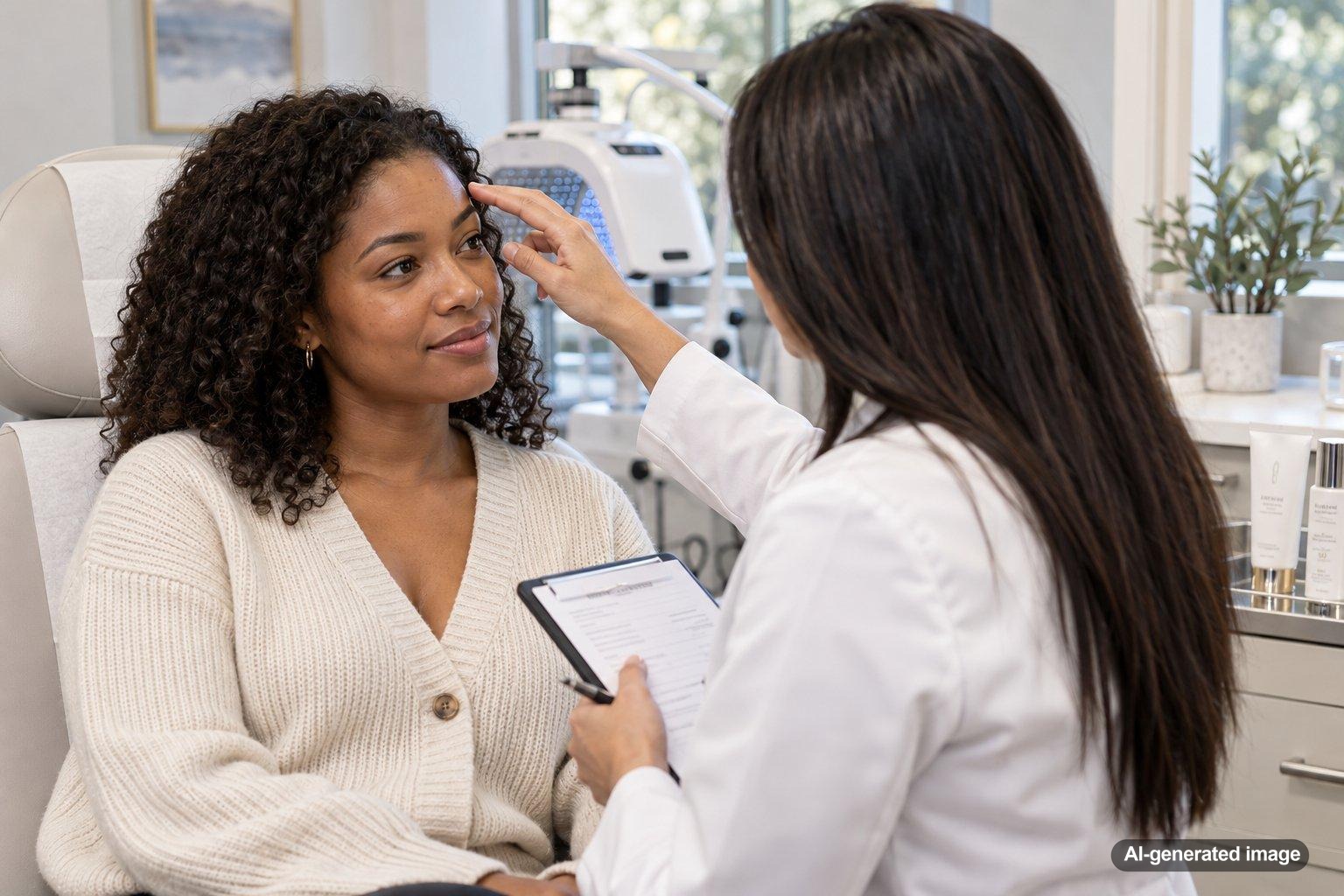
When a rough, scaly spot returns after being frozen with liquid nitrogen, it can be frustrating to wonder whether another treatment will make a difference. Actinic keratoses are sun-related precancerous skin changes that may persist, recur, or develop in nearby areas of previously damaged skin. Cryotherapy is commonly used to treat individual lesions, but repeated spots can sometimes call for a broader treatment strategy.
Photodynamic therapy (PDT) is one option a dermatologist may consider when actinic keratoses keep appearing after cryotherapy. Rather than focusing exclusively on one visible spot, PDT can treat a larger area of sun-damaged skin. Understanding why lesions return, how PDT works, and when a closer examination is necessary can help patients make informed decisions about their next steps.
Quick Answer: Can PDT Help After Cryotherapy?
- PDT may be appropriate for recurrent actinic keratoses. It is particularly worth discussing when multiple lesions develop within an area of chronic sun damage.
- Cryotherapy and PDT serve different purposes. Cryotherapy targets individual lesions, while PDT can address a broader treatment field.
- A returning spot needs reassessment. Not every rough or persistent lesion is an actinic keratosis, and some require a biopsy before additional treatment.
- PDT involves a light-sensitive medication and controlled light exposure. Temporary redness, discomfort, and peeling are possible afterward.
- Ongoing skin examinations and sun protection remain important. Neither approach prevents every future lesion from developing.
Why Actinic Keratoses May Return After Cryotherapy
An actinic keratosis, often called an AK, is a rough or scaly skin lesion associated with accumulated ultraviolet (UV) exposure. These lesions commonly develop on the face, scalp, ears, forearms, and backs of the hands. They are considered precancerous because some may progress to squamous cell carcinoma, a form of skin cancer.
Cryotherapy uses extreme cold, usually liquid nitrogen, to damage and remove an individual abnormal lesion. It is a well-established treatment, but recurrence or the appearance of additional lesions does not necessarily mean the original procedure was performed incorrectly.
Common Reasons for Repeated Lesions
- Extensive sun damage: Surrounding skin may contain microscopic abnormalities that are not yet visible.
- Incomplete response: Some lesions may persist despite initial freezing and need another evaluation.
- New lesion development: Another actinic keratosis can appear close to a previously treated spot.
- Lesion thickness: Thicker or more resistant lesions may require a different treatment approach.
- Continued UV exposure: Ongoing sun exposure contributes to additional skin damage over time.
Distinguishing a genuinely recurrent lesion from a new nearby growth matters because treatment decisions depend on what the dermatologist finds during examination.
What Is Photodynamic Therapy for Actinic Keratoses?
Photodynamic therapy is an office-based procedure that combines a photosensitizing medication with a specific type of light. The medication is applied to a designated treatment area and is activated by controlled light exposure. This process produces a localized reaction that damages targeted abnormal cells.
PDT is frequently considered a field-directed treatment. In dermatology, a treatment field is an area of skin with accumulated sun damage that may contain both visible actinic keratoses and less obvious changes.
For someone who repeatedly develops actinic keratoses across the forehead, cheeks, or scalp, a dermatologist may consider whether treating the broader field would be more appropriate than repeatedly freezing isolated spots.
PDT does not remove the need for future surveillance. Additional actinic keratoses can develop after treatment, particularly in skin with a long history of UV exposure.
How PDT and Cryotherapy Differ
Both approaches are used in the management of actinic keratoses, but their treatment targets and practical considerations are different.
| Consideration | Cryotherapy | Photodynamic Therapy |
|---|---|---|
| Primary approach | Freezes individual lesions | Treats a designated area using medication and light |
| Typical consideration | One or a few distinct lesions | Multiple or recurring lesions across a field of sun damage |
| Treatment experience | Brief freezing procedure | Medication application, a waiting period, and light exposure |
| Possible skin reaction | Localized redness, blistering, crusting, or pigment change | Redness, burning or stinging, swelling, peeling, or crusting across the treated area |
| Follow-up | Reassessment of treated lesions | Reassessment of the treatment field and remaining lesions |
Neither treatment is automatically preferable for every patient. A dermatologist may recommend cryotherapy, PDT, a prescription field therapy, a combination of approaches, or a biopsy depending on the clinical findings.
When Might a Dermatologist Consider PDT After Cryotherapy?
There are several circumstances in which PDT may become part of the discussion.
Multiple Actinic Keratoses Keep Appearing
If new lesions repeatedly develop within the same sun-exposed region, a dermatologist may assess whether the surrounding skin would benefit from field-directed treatment rather than treating only the most noticeable growths.
Repeated Cryotherapy Is Becoming Impractical
Freezing several isolated spots may be straightforward. When lesions are numerous or distributed across a broad area, a different approach may be useful. The extent of the affected skin and the patient’s treatment preferences both matter.
The Area Has Extensive Visible Sun Damage
Skin with widespread roughness, discoloration, and multiple actinic keratoses may contain changes that extend beyond individual visible lesions. PDT can be considered for appropriately selected areas of this type.
Previous Treatments Have Not Provided an Adequate Response
A dermatologist may reconsider the treatment strategy when lesions persist or continue to develop. However, a single repeatedly recurring or unusually thick lesion may first need a biopsy to exclude squamous cell carcinoma rather than proceeding directly to PDT.
What Happens During a PDT Appointment?
The details vary according to the medication, treatment area, light source, and clinical protocol. A typical PDT visit for actinic keratoses involves several steps.
- Skin assessment: The dermatologist evaluates the lesions and determines which areas are suitable for treatment. Suspicious spots may require additional evaluation.
- Preparation: The treatment field is cleaned, and the clinician may prepare the skin according to the selected protocol.
- Medication application: A photosensitizing agent is applied to the designated area.
- Activation period: The medication remains on the skin for a protocol-specific interval before light treatment.
- Light exposure: A controlled light source activates the medication. Some patients experience warmth, stinging, or burning sensations during this stage.
- Aftercare instructions: The team explains how to protect the treated skin and manage expected reactions.
The number of sessions and the interval between them depend on the particular protocol and the skin’s response. Some patients may require additional treatment or a different approach for lesions that remain.
What Should You Expect After PDT?
A temporary inflammatory reaction is expected with many PDT protocols. Treated skin may become red, tender, swollen, or sensitive. Peeling and crusting can also occur, with the intensity varying by patient, location, and treatment method.
Because the medication temporarily increases sensitivity to light, following the clinician’s specific light-avoidance instructions is especially important. Depending on the medication and protocol, patients may need to avoid sunlight and other bright light sources for a defined period after treatment. The treating office should provide precise instructions rather than relying on a general rule.
Healing and visible improvement vary. Follow-up allows the dermatologist to evaluate how the field responded and whether any remaining lesions warrant closer examination.
What Can You Do at Home Between Treatments?
Home care cannot reliably remove or diagnose a precancerous lesion, but a consistent sun-protection routine can help limit additional UV damage.
- Use a broad-spectrum sunscreen with SPF 30 or higher on exposed skin, following label instructions for reapplication.
- Wear protective clothing, a wide-brimmed hat, and sunglasses when outdoors.
- Seek shade, particularly during periods of intense sunlight.
- Avoid tanning beds and deliberate tanning.
- Observe previously treated areas for spots that persist, change, bleed, or become uncomfortable.
- Follow the dermatologist’s individualized skin care and post-procedure instructions.
In Fort Lauderdale, year-round outdoor activities and frequent sun exposure make daily protection particularly relevant. Seasonal residents and international visitors may also benefit from planning treatment and follow-up around their travel schedules.
Do not attempt to freeze, scrape, peel, or chemically remove a suspicious lesion at home. These approaches can injure the skin and delay an accurate diagnosis.
Other Professional Options for Recurrent Actinic Keratoses
PDT is one of several potential approaches. A dermatologist may also discuss additional cryotherapy for selected lesions, prescription topical field treatments, or procedures that remove tissue for examination.
Prescription treatments such as fluorouracil, imiquimod, and other appropriate topical therapies may be considered for some patients. Their suitability depends on the treatment area, medical history, expected skin reaction, and other factors.
Thick, tender, or persistent lesions may require biopsy or removal rather than routine field treatment. In some cases, a clinician may combine lesion-directed and field-directed approaches.
At Waverly DermSpa, we offer Photodynamic Therapy (PDT) and can help you understand whether it may be appropriate.
When Should You See a Dermatologist?
An actinic keratosis that appears to return after cryotherapy deserves reassessment, especially when the exact same spot remains rough or raised after the expected healing period.
More prompt evaluation is appropriate if a lesion:
- Grows noticeably or develops a firm, raised, or thickened surface.
- Bleeds without an obvious injury or repeatedly forms a crust.
- Becomes increasingly painful or tender.
- Develops an open area that does not heal.
- Changes rapidly in appearance.
- Persists despite previous treatment.
These features do not establish a skin cancer diagnosis, but they can warrant a closer examination and possibly a biopsy. PDT should not be used as a substitute for evaluating a lesion suspicious for invasive skin cancer.
Frequently Asked Questions
Can PDT treat an actinic keratosis that came back after freezing?
PDT may be an option when actinic keratoses recur after cryotherapy, particularly when multiple lesions affect a broader area. A dermatologist should first confirm the diagnosis and determine whether any persistent spots require biopsy.
Does recurrence after cryotherapy mean the lesion is skin cancer?
No. An actinic keratosis may persist or recur without having progressed to cancer. However, a recurrent lesion should not automatically be assumed to be harmless. Examination helps determine whether additional treatment or tissue sampling is necessary.
Is PDT more effective than cryotherapy?
Effectiveness depends on the type, number, thickness, and location of lesions and the treatment protocol. Cryotherapy is commonly used for isolated lesions, while PDT may be considered for a broader field of sun damage. A dermatologist can explain the advantages and limitations of each for an individual situation.
Does PDT hurt?
Some patients experience stinging, warmth, or burning during light exposure. The sensation varies with the treatment area, medication, and protocol. Redness and tenderness can also occur afterward. Your clinician can explain what to expect and how discomfort is managed.
Will PDT prevent future actinic keratoses?
PDT may reduce existing actinic keratoses within a treated field, but it cannot eliminate a person’s history of UV damage or prevent every new lesion. Sun protection and regular dermatologic follow-up remain important.
Can PDT be scheduled before returning home from a Florida vacation?
Travel plans should be discussed before scheduling. PDT may involve temporary skin reactions, specific restrictions on light exposure, and follow-up needs. A dermatologist can help determine whether the timing is practical, especially for patients who expect substantial outdoor exposure or extended travel immediately afterward.
Ready to get help?
Schedule an appointment or send a message and our team will get back to you.
Prefer to call? 954-666-3736
Disclaimer
This article is for educational purposes and is not medical advice. For diagnosis and personalized treatment, please book an appointment with a board-certified dermatologist.
Sources & further reading
- American Academy of Dermatology (AAD) – Actinic keratosis: Diagnosis and treatment
- DermNet – Actinic keratoses (Solar keratosis): Diagnosis and Treatment
- American Academy of Dermatology (AAD) – Actinic keratosis
